Logo - The Possums baby and toddler sleep program.
parents home
librarybrowse all programsfind answers nowaudioprograms in audiogroup sessionsgroup sessions with dr pam
menu icon NDC Institute
possums for professionals
(the ndc institute)
menu icon eventsguest speakers
menu icon the sciencethe science behind possums/ndcmenu icon who we arewho we aremenu icon evidence basendc research publicationsmenu icon dr pam's booksdr pam's books
menu icon free resourcesfree resourcesmenu icon dr pam's blogdr pam's blog
menu icon consult with dr pamconsult with dr pammenu icon consult with dr pamfind a possums clinicmenu icon find a NDC accredited practitionerfind an ndc accredited practitioner
login-iconlogin

Welcome back!

Forgot password
get access
search

Search programs

Toddler Sleep (12-36 months) icon

Toddler Sleep
(12-36 months)


  • Do toddlers become overtired and overstimulated?
  • What can you do when your toddler takes a very long time to go to sleep in the evenings?
  • What to do when your toddler wakes very frequently between his bedtime and when you go to bed?
  • How to manage evenings with your toddler when you're just too tired or don't have help?
  • Will putting on magnesium oil or spray help with your little one's sleep?
  • How to do evenings with a breastfed toddler when the breastfeeding mother is not available?
  • How best to care for your breastfeeding toddler's teeth before bedtime or in the night?
  • How to best care for your bottle fed toddler's teeth before bedtime or in the night?

Listen to audio program

Next article

Sign up now
  • Toddler Sleep (12-36 months)
  • S3: Evenings
  • CH 3: FAQs

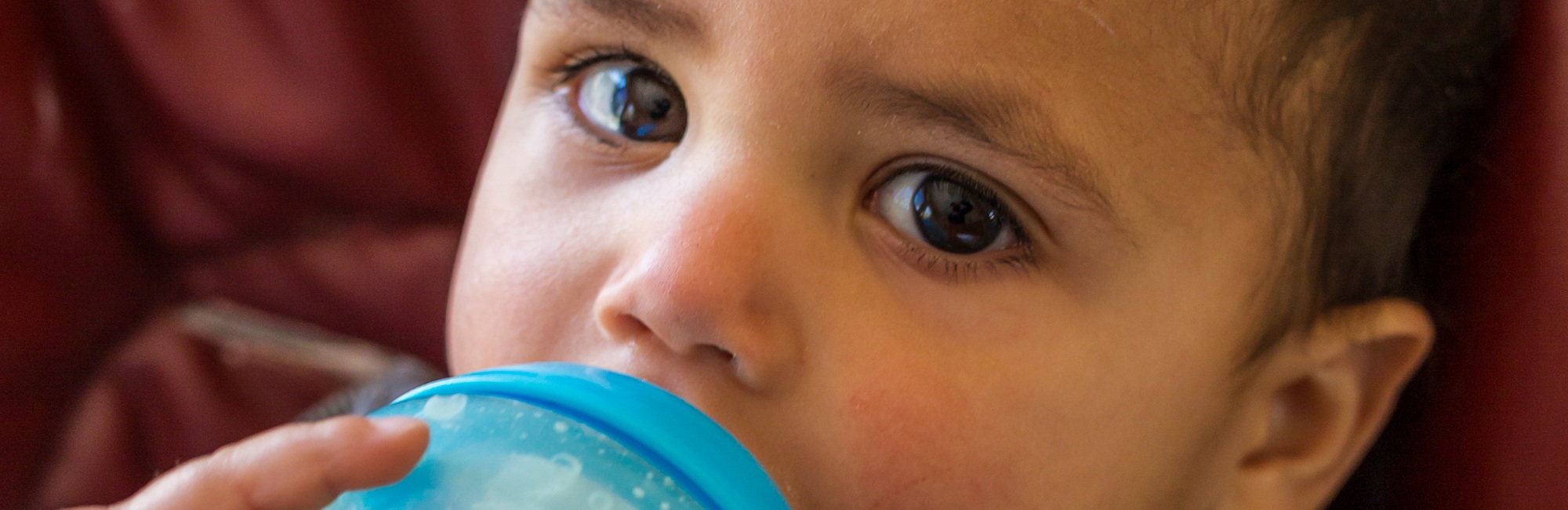
How to best care for your bottle fed toddler's teeth before bedtime or in the night?
Dr Pamela Douglas26th of Nov 202323rd of May 2024

toddler bottle feeds themselves

You might be already cleaning your toddler's teeth sometime in the evening, before the bedtime bottle. Cleaning your toddler's teeth is often a wriggly, very frustrating activity! If you have a very young toddler, closer to 12 months of age, you might do it yourself, quickly. The main thing is not to accidentally create a conditioned dialling up with teeth cleaning by forcing it upon your little one! Let your little one be in control of teeth cleaning as much as possible as she matures, as you supervise and encourage.

Children over 12 months of age who take the bottle in the night are at slightly increased risk of dental caries, and that risk increases for toddlers over two years of age who take a bottle in the night. Some families do a quick swipe over the little one's teeth with water on a very soft toothbrush in the night. You can find out about stopping bottles in the night here.

Avoiding bottles of milk in the night will have only a small effect on dental decay. You can find out about when you might stop the bottle here. The main things which prevent dental decay are

  1. A wholesome diet with no sweets and minimal sugars, juice or sticky dried fruits

  2. Water flouridation

  3. Flouridated tooth-paste. (To my mind, it doesn't matter if you don't use flouridated tooth-paste if you decide to wipe or brush your toddler's teeth over after a bottle in the night, as long as you're using it at other times.)

Also, importantly, from 12 months of age, there is no need for formula use. Whole-fat cow's milk is the best option (unless your doctor has specifically recommended special toddler formula). Toddler formula does not protect your toddler's brain or immunity more than cow's milk, but contains twice as much carbohydrate and sugar, which is not good for your little one's health or teeth. You can find out more here.

Selected references

Julien S. Prophylaxis of caries with fluoride for children under five years. BMC Pediatrics. 2021;21 (Suppl 1)(351): https://doi.org/10.1186/s12887-12021-02702-12883.

Khan SY, Schroth RJ, De Jesus V. A systematic review of caries risk in children < 6 years of age. International Journal of Paediatric Dentistry. 2023;00:doi:10.1111/ipd.13140.

Van Meijeren-van Luneren A, Voortman T, Elfrink M. Breastfeeding and childhood dental caries: results from a socially diverse birth cohort study. Caries Research. 2021;55:153-161.

Veile A, Miller V. Duration of breast feeding in ancestral environments. Encyclopedia of Evolutionary Psychological Science. https://link.springer.com/referenceworkentry/10.1007/978-3-319-19650-3_818: Springer, Cham.; 2021.


baby bottle feeds self in bed

Finished

share this article

Next up in Towards independent bedtimes

Protecting sleep throughout childhood

Sleeping father with chappy child laying on his back on couch

Healthy childhood bedtimes are relaxed, no-fuss, and a time for cuddles

Healthy sleep is relaxed and no-fuss, starting from birth. Healthy sleep for our children doesn't require rigid routines or rules. This might seem very different from what you've heard, and I hope that as you work through The Possums Sleep Program it will all start to make sense.

The Possums Sleep…

Keep reading
logo‑possums

Possums in your inbox

Evidence-based insights, tips, and tools. Occasional updates.

For parents

parents homebrowse all programsfind answers nowprograms in audiogroup sessions with dr pam

For professionals

possums for professionals
(the ndc institute)
guest speakers

About

the science behind possums/ndcwho we arendc research publicationsdr pam’s books

More resources

free resourcesdr pam’s blog

Clinical consultation

consult with dr pamfind a possums clinicfind an ndc accredited practitioner

Help & support

contact usfaqour social enterpriseprivacy policyterms & conditions

Social

instagramlinked infacebook

Possums acknowledges the traditional owners of the lands upon which The Possums Programs have been created, the Yuggera and Turrbal Peoples. We acknowledge that First Nations have breastfed, slept with, and lovingly raised their children on Australian lands for at least 65,000 years, to become the oldest continuous living culture on Earth. Possums stands with the Uluru Statement from the Heart.