
Does a pacifier or dummy help with toddler sleep?
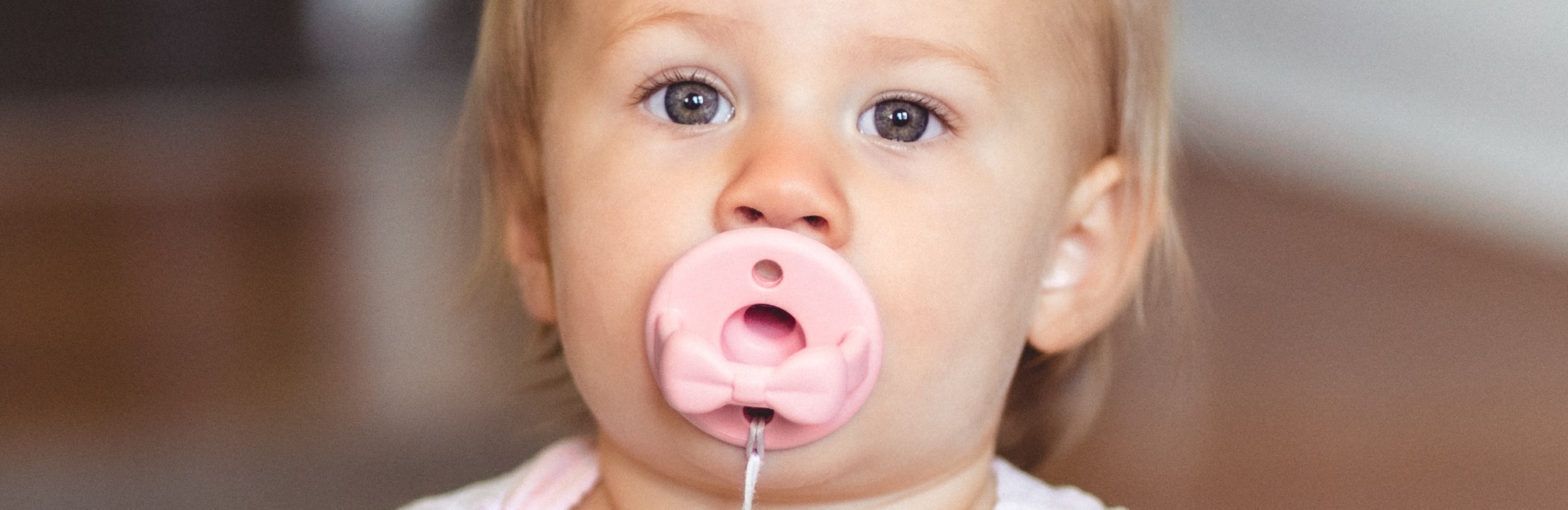
Pacifier use doesn't improve toddlers' sleep
Pacifier use doesn't improve toddler's sleep. However, many parents have told me over the years that they find the pacifier is a useful tool for making their days and nights manageable.
I don’t usually recommend pacifiers, though I quite understand when parents tell me they are using one. As with most things when it comes to baby and toddler care, it seems to me that you just need evidence-based information, and then you’ll work out what’s right for you, your small child, and your family.
Things you need to know if you do use a pacifier
If you decide to include pacifier use in your toolbox for getting through the days and nights, there are things to be aware of.
-
Children under four years of age who use pacifiers are nearly twice as likely to develop recurrent middle ear infection.
-
After six months of age, pacifier use for several hours or more during the day might interfere with opportunities to experiment with imitating sounds and speaking.
-
The more the pacifier is used before one or two years of age, the greater the chance that the little one's vocabulary will be affected (with less vocabulary development than would otherwise be the case). Prolonged use of pacifiers throughout the first three years of life or longer results in speech development problems.
-
Some dentists have recently suggested that pacifiers should be fitted and changed as the infant grows, to suit an infant's facial biometrics. These dentists theorise that better fitting pacifiers will prevent the narrowing of the palate and other orofacial changes which have been linked with long-term pacifier use. However, the evidence underpinning this suggestion is not strong, and is likely to apply only to infants who are using the pacifier substantially more than is usually advised.
I recommend weaning from the pacifier or dummy after the first six months of life, just as soon as you think you can get by without it. Some parents I've worked with over the years who use the pacifier or dummy after six months keep it as a back-up for when their older baby or toddler is very dialled up. For example, they might use it for a toddler who is prone to crying in the car. This occasional use still protects speech development.
Most families I've worked with over the years don't use pacifiers with toddlers, and get by just fine.
Selected references
Alm B, Wennergren G, Molborg P. Breastfeeding and dummy use have a protective effect on sudden infant death syndrome. Acta Paediatrica. 2016;105:31-38.
Balaban R, Camara AC, Filho ABRD. Infant sleep and the influence of a pacifier. International Journal of Paediatric Dentistry. 2018;28(5):481-489.
Feldens CA, Petracco LB, Nascimento GG. Breastfeeding protects from overjet in adolescence by reducing pacifier use: a birth cohort study. Nutrients. 2023;15:3403.
Jaafar SH, Ho JJ, Jahanfar S, Angolkar M. Effect of restricted pacifer use in breastfeeding term infants for increasing duration of breastfeeding. Cochrane Database of Systematic Reviews. 2016;8:CD007202.
Kanellopoulos A, Costello SE. The effects of prolonged pacifier use on language development in infants and toddlers. Frontiers in Psychology. 2024;15:1349323
Munoz LE, Kartushina N, Mayor J. Sustained pacifier use is associated with small vocabulary sizes at 1 and 2 years of age: a cross-sectional study. Developmental Science. 2024:https://doi.org/10.1111/desc.13477.
Rovers MM, Numans M, Langenbach E. Is pacifier use a risk factor for acute otitis media? A dynamic cohort study. Family Practice. 2008;25:233-236.
Shandley S, Capilouto G, Eleanora T. Abnormal nutritive sucking as an indicator of neonatal brain injury. Frontiers in Pediatrics. 2021;8:599633.
Strutt C, Khattab G, Willoughby J. Does the duration and frequency of dummy (pacifier) use affect the development of speech? Inernational Journal of Language & Communication Disorders. 2021;56(3):512-527. https://www.ncbi.nlm.nih.gov/pmc/articles/PMC5049485/
Tesini DA, Friedman C, Kethu A, Hendricks KW. Pacifier sizing as a prescription for better oral health outcomes for infants: a call to action. Children. 2025;12:1257. https://doi.org/1210.3390/children12091257.
