What does the research tell us about traditional bodywork for diagnoses of restricted oral connective tissues in babies with breastfeeding problems?
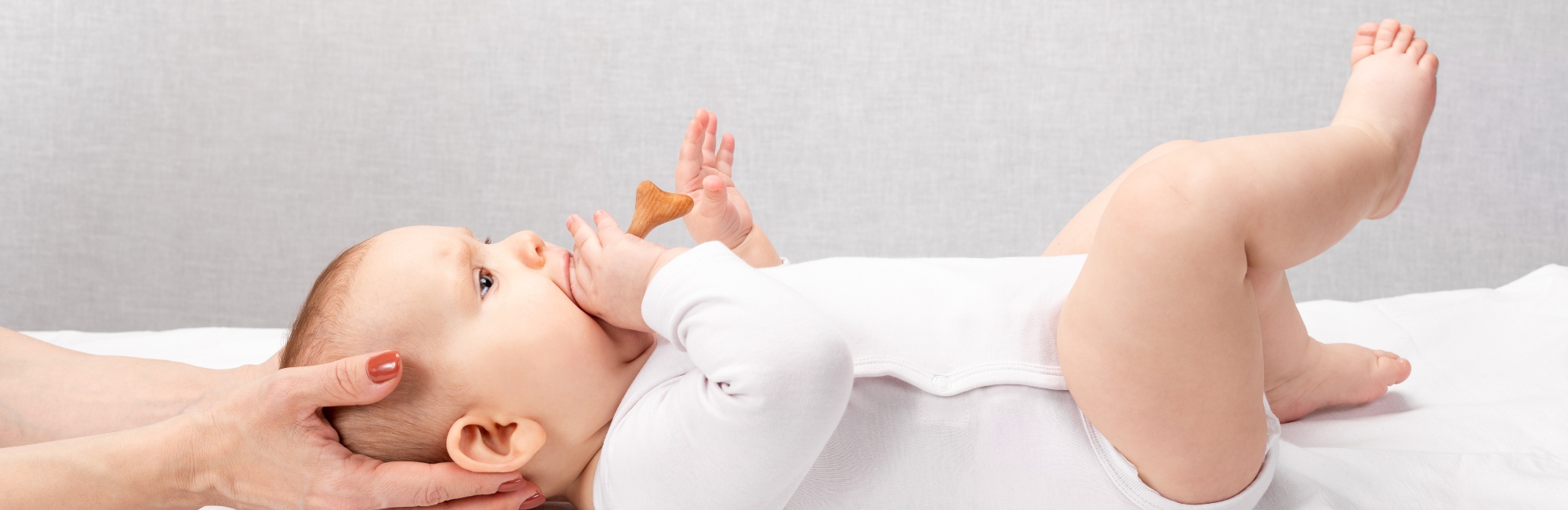
What the research studies tell us about traditional bodywork therapy for babies with breastfeeding problems
Here's what the science tells us about the effects of traditional bodywork for diagnoses of restricted oral connective tissues in babies with breastfeeding problems. I discuss the most recent systematic reviews and a randomised controlled trial.
-
In a 2017 randomised controlled trial by Herzhaft-Le Roy and Xhignesse showed that osteopathic treatment did not result in an improvement in nipple pain one week later. 97 mothers of babies <6 weeks with sucking dysfunctions were randomised to receive either 30 minutes of light stroking far from the site of the diagnosed dysfunction (the control group) or 30 minutes of osteopathic treatment. Both groups received fit and hold support from an International Board Certified Lactation Consultant (IBCLC), although the fit and hold methods used were not specified. An improvement in sucking skills, measured by the LATCH score two days later could be attributed to the IBCLC fit and hold intervention, but did not correlate with improvement in maternal symptoms at two days or one week after the intervention. Even with the improvement noted in the LATCH score, only the visible look of the latch and the way the infant was held changed positively, but not swallowing, nipple shape following feeding, or breast or nipple comfort. This trial
-
A 2019 systematic review by Prevost et al of manual therapy for paediatric conditions showed inconclusive effect for the diagnosis of suboptimal infant breastfeeding. The same inconclusive effect was found for infantile colic.
-
In 2022 Garrido et al conducted a systematic review of the use of the effectiveness of myofunctional therapy in ankyloglossia. Eleven studies were selected, three case reports, five observational studies, and three randomised clinical trials. Only one of the RCTs was of good methodological quality. Only 36% of patients in these studies were infants 0-6 months with nipple pain, duration of feeds and weight gain concerns. The average age range was eight years in 80% of the articles. There was no agreement concerning how to make the diagnosis of ankyloglossia. It was not possible to assess myofunctional therapy without surgery all articles had frenotomy performed. Myofunctional therapy was continued for one year or longer to prevent relapse of dysfunctional oral motor habits, to promote exclusive nasal breathing and to ensure long-term habituation of ideal resting oral posture, though the babies received therapist treatment for about four weeks. The authors acknowledged that the studies were of limited methodological quality and concluded that frenotomy was more effective than myofunctional therapy.
-
In 2024 Cowdhury et al conducted a systematic review of chiropractic, myofunctional therapy, and osteopathy for ankyloglossia diagnosed in breastfeeding infants. The authors found 11 studies. Four studies met the inclusin criteria, two cross-sectional, one case report, and one case series. All studies reported frenotomy in combination with bodywork therapy. All studies lacked control or comparator groups. The definitions of ankyloglossia were confused. The authors conclude that there is not sufficient evidence to support nonsurgical approaches to ankyloglossia.
In summary, there is no convincing evidence that traditional bodywork therapy for diagnoses of restricted oral connective tissues helps babies with breastfeeding problems.
Notes on why we need methodologically strong study design when researching breastfeeding mothers and babies
The field of how best to help women and their babies breastfeed without problems (clinical breastfeeding support) remains a research frontier. This is why there is such a big blind spot in our health system about the importance of fit and hold and the effects of mechanical pressures in breastfeeding. These two vital areas, for instance, are almost never considered in clinical breastfeeding research, so that study designs investigating the whole range of breastfeeding and lactation problems can't yet be trusted to tell us what we want to know.
The use of traditional bodywork therapy for breastfeeding problems is not a public health strategy for improving breastfeeding rates
The dominance of traditional bodywork therapists in the care of breastfeeding women and their babies in high income countries, including in multi-disciplinary teams with International Board Certified Lactation Consultants and dentists or providers performing frenotomies, is not currently a viable or evidence-based public health system response to the high incidence of breastfeeding problems.
However, it is possible that traditional bodywork therapists lead what I believe will be a move towards the kind of evolutionary bodywork offered by Possums Breastfeeding & Lactation.
All research needs to consider the healing effects of the passage of time
The passage of time alone can resolve some breastfeeding problems - though needless to say I don't recommend this as a strategy! We don't know which mother-baby pair will be in the group for whom problems resolve over time, or for whom problems worsen. But often it can seem to parents as if the course of treatments is helping, when in fact it is the passage of time which helps.
Randomised controlled trials are the best way to take into account the healing effects of the passage of time, since time passing applies equally to each group that the participant is randomly assigned to.
All research needs to consider the neurobiological power of expectation (also known as the placebo effect)
The neurobiological impact of expectation is powerful, measurable, and applies to both provider and parent. This is not because providers or parents are deceived: it's just the way the human brain works.
The neurobiological effect of expectation is known to be reinforced by financial investment - and the cost of frenotomy and also of bodywork treatments are often high.
Randomised controlled trials are the best way to take into account the neurobiological power of expectation, since participants are not aware of whether they are receiving an active intervention or not. RCTs, however, becomes very difficult to conduct with complex and multi-component behavioural interventions, like breastfeeding interventions. For this reason, various methodologies need to be applied when we're researching what really helps breastfeeding women and their babies - a layering up of methodologies or research approaches, as we evaluate what really helps.

Recommended resources
Who gives traditional bodywork therapy to breastfed babies and why?
What happens in traditional bodywork therapy for babies with breastfeeding problems and why this conflicts with a science-based, evolutionary and neurodevelopmental perspective
Breastfeeding, orofacial development and traditional bodywork therapy
Reductionism vs complex biological systems: why traditional bodywork therapy lets breastfeeding women and their babies down
Nine reasons why traditional bodywork therapy makes life with your baby harder than it needs to be
Selected references
Chowdhury R, Khoury S, Leroux J. Alternative therapies for ankyloglossia-associated breastfeeding challenges: a systematic review. Breastfeeding Medicine. 2024:DOI: 10.1089/bfm.2024.0072.
Garrido MPG, Garcia-Munoz C, Rodriguez-Huguet M. Effectiveness of myofunctional therapy in ankyloglossia: a systematic review. International Journal of Environmental Research and Public Health. 2022;19:12347.
Herzhaft-Le Roy J, Xhignesse M, Gaboury I. Efficacy of an osteopathic treatment coupled with lactation consultants for infants' biomechanical sucking difficulties: a randomized controlled trial. Journal of Human Lactation. 2017;33(1):165-172.
Prevost P, Gleberzon B, Carleo B, Anderson K, Cark M, Pohlman KA. Manual therapy for the pediatric population: a systematic review. BMC Complementary and Alternative Medicine. 2019;19(1):doi:10.1186/s12906-12019-12447-12902.