Is infant frenotomy for breastfeeding problems an evidence-based solution?
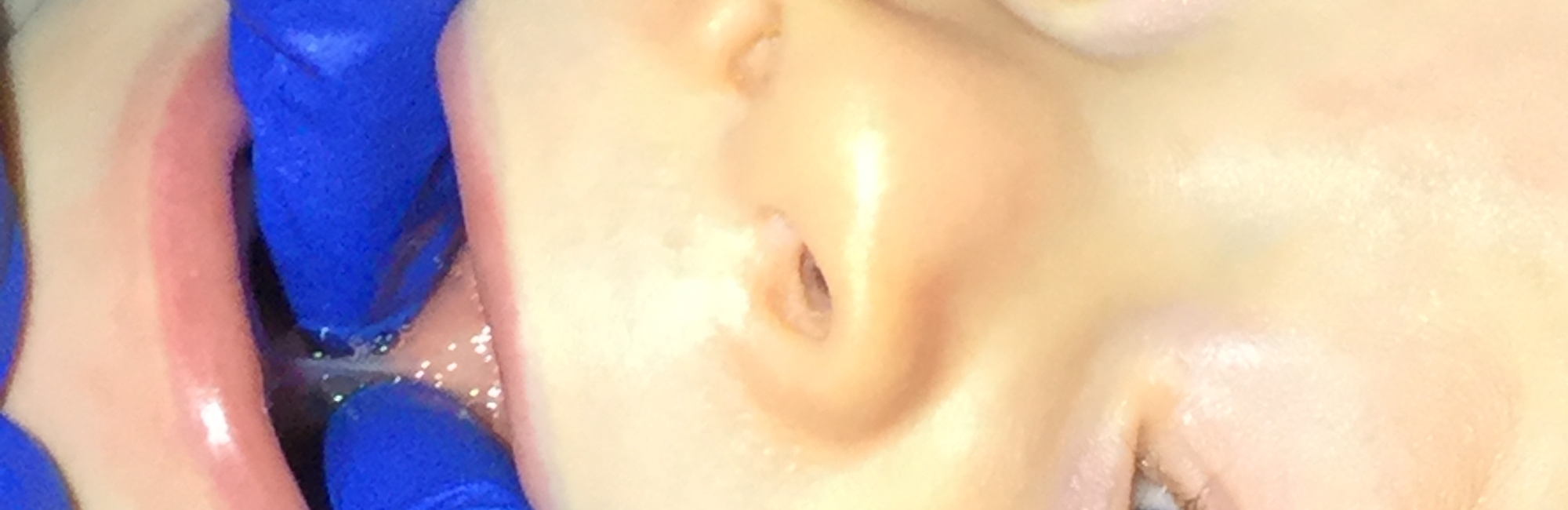
Systematic reviews are unable to demonstrate any clear benefits of infant frenotomy on breastfeeding outcomes
Syntheses and analyses, either as systematic reviews or metanarrative reviews, fail to demonstrate benefits of frenotomy for ankyloglossia or tongue-tie. It is possible that the benefits of simple scissors frenotomy for classic tongue-tie are being overlooked because of the lack of clarity in all existing research concerning the definition of tongue-tie.
Often you'll hear it said that research has limitations, that there's not enough research done yet, that we need to take into account clinical experience. There's often some truth to each of these claims when it comes to helping women and babies with breastfeeding problems. What matters, in my view, is that we understand how to make sense of research, how to set it up and how to analyse it, drawing on clinical experience and robust, debateable theoretical models. Unfortunately, most of us as health professionals lack training or experience in this. This is a health system and education problem, not any individual's fault. Very commonly, when it comes to breastfeeding, theories are stated to breastfeeding women and their families as facts.
In 2013, when I first published an article questioning the usefulness of the diagnosis of posterior tongue-tie, I was operating out of clinical experience and theoretical frames. Now, many studies have been conducted which aim to investigate the usefulness of frenotomy, many in clinics where a range of frenotomies (including for diagnoses of posterior tongue tie, labial ties, and buccal ties) are offered as a service for babies with breastfeeding problems. Yet when these are analysed critically, they still don't show benefit.
Delgadillo et al 2025: systematic review and meta-analysis
Out of 2,961 peer-reviewed published studies investigating the effects of frenotomy on breastfeeding outcomes in children under the age of five years, 55 studies were included in the qualitative synthesis, and 6 provided sufficient data for meta-analysis.
The authors conclude: "Although the meta-analysis suggested a statistically significant benefit of lingual frenectomy over no intervention in improving breastfeeding outcomes, the small number of eligible studies and the substantial heterogeneity in diagnostic criteria, study design, and outcome measures prevent drawing definitive conclusions. At present, the available evidence does not support routine frenectomy in all children under five with ankyloglossia."
Here are some key aspects of this study.
-
"Qualitative assessment revealed notable methodological weaknesses. Selection bias was identified in 33% of studies and detection bias in 93%. ... Only 28.6% of studies applied validated diagnostic tools."
-
"Sensitivity analysis excluding the study by Ballard et al. [46], which had extreme values, markedly lowered heterogeneity but yielded a non-significant result."
-
"Diagnostic methods most frequently used were the Coryllos classification (27%) and the Hazelbaker Assessment Tool for Lingual Frenulum Function (19%). Breastfeeding-related outcomes were often assessed through maternal self-reports, including nipple pain (VAS, 33%), LATCH (20%), and IBFAT (13%). These inconsistencies limited comparability across studies."
-
"While institutions such as the American Academy of Pediatric Dentistry and the UK’s NICE guidelines acknowledge that a restrictive lingual frenulum may impact child health - a position supported by several authors - the Canadian and Japanese Pediatric Societies contend that tongue-tie generally does not interfere with breastfeeding and therefore do not support routine frenotomy."
Dinh et al 2025: randomised controlled trial
Dinh et al conducted an RCT in a Florida (US) hospital. This study randomised 112 mother-baby pairs into a scissors frenotomy and sham scissors frenotomy groups. The study was conducted on full term infants (at least 37 weeks gestation, no older than 2 weeks post-birth), born with no medical comorbidities, who were diagnosed with ankyloglossia (defined by HATLFF function and appearance scores), and whose mother had difficulty breastfeeding as measured by a lactation nurse using a LATCH score.
One of three paediatric craniofacial surgeons conducted either the scissors frenotomy or the sham frenotomy. One infant required suturing post-frenotomy due to bleeding and was excluded from further participation in the study. (Two others didn't continue due to what was diagnosed as 'infant fatigue'). A blinded lactation consultant assessed LATCH scores and pain scores before and after the intervention.
On analysis of the data, the study showed no significant differences between lingual frenotomy and sham procedures on breastfeeding pain or LATCH scores in the immediate newborn setting.
Thomas et al (American Association of Pediatrics) 2024: systematic review
In 2024, a very experienced team of researchers in association with the American Association of Pediatrics published a comprehensive and rigorously conducted review of the research literature to date, coming to the same conclusion as as Professor Borowtiz
-
That there is no evidence to suggest that frenotomy leads to longer durations of breastfeeding in infants.
-
That there is low-level evidence to suggest that frenotomy helps with breastfeeding pain.
Borowitz et al 2023: narrative review
In this video I discuss the review by Professor Borowitz on tongue-tie, which came out in 2023.
References
Borowitz SM. What is tongue-tie and does it interfere with breast-feeding? - a brief review. Frontiers in Pediatrics. 2023;11:1086942.
You can read Professor Borowitz's exellent review open access here.
Delgadillo GJ, Rojoas JZ, Munozl MA, Luque-Martinez I. Frenotomy for ankyloglossia in children under five: a systematic review and metanalysis on breastfeeding outcomes. International Breastfeeding Journal. 2025;20(81):https://doi.org/10.1186/s13006-13025-00773-x.
Dinh LA, El-Rabbany M, Aslam S, Ricalde P. Does lingual frenotomy improve breastfeeding in newborns with ankyloglossia? A randomized controlled trial. Journal of Oral and Maxilliofacial Surgery. 2025:DOI: https://doi.org/10.1016/j.joms.2025.1004.1006.
Thomas J, Bunik M, Holmes A. Identification and management of ankyloglossia and its effect on breastfeeding in infants: clinical report. Pediatrics. 2024;154(2):e2024067605.
You can read the systematic review by Professor Jennifer Thomas and her team, published in Pediatrics by the American Academy of Pediatrics open access here.