In term babies, suck problems are only occasionally caused by birth trauma
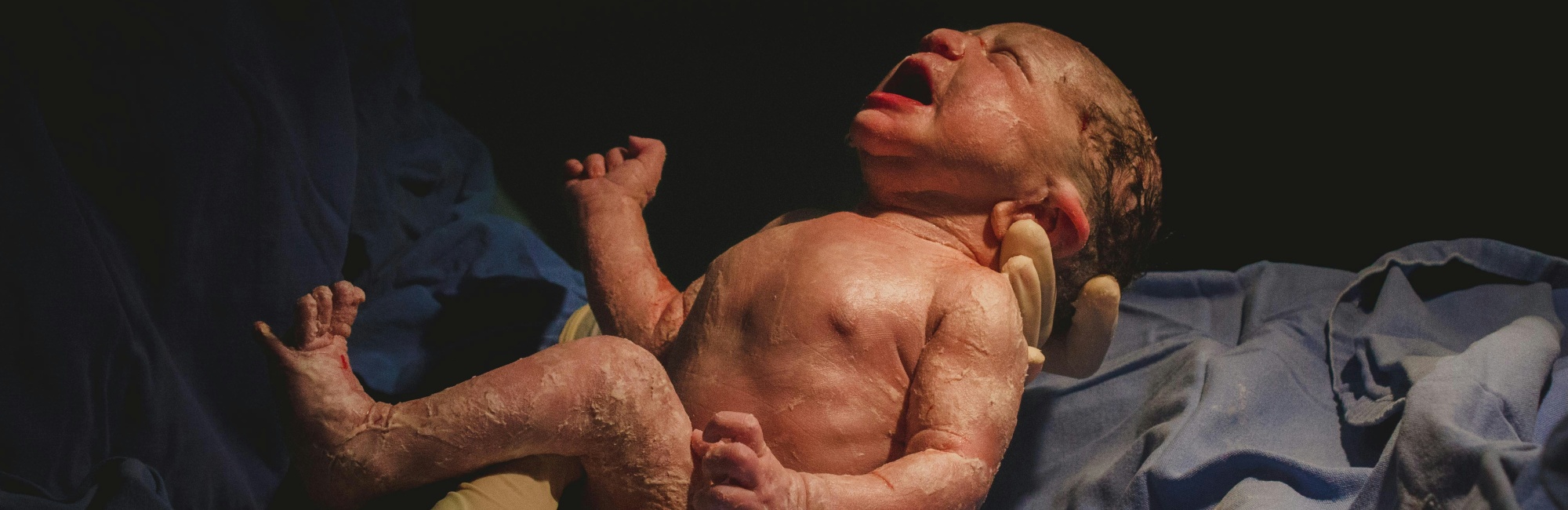
Birth-related injury and maternal pain medications can affect your newborn's breastfeeding
The kinds of birth-related injury which might impact upon breastfeeding are
-
Bruising or haemorrhage from forceps or vacuum delivery - caputs
-
Drowsiness due to medications
-
Prematurity, with weak suck
-
Jaundice due to caput or haemorrhage, with bilirubin effects upon alertness
Other than in these conditions, babies who aren't born prematurely, and who don't have neurological medical conditions will suck reflexly. The capacity to find the nipple and suck is one of the relatively small number of 'fixed action patterns' that we find in the human newborn. The dropping of the jaw, with the tongue following along, is a two-million-year-old, hardwired mammalian reflex.
Lack of vigour in sucking is not innate to an otherwise well (non-sedated) baby, but relates to context
Lack of vigour in sucking relates to a range of factors, but is not due to subluxed cranial nerves or to neurological damage from the birth, the way you might hear.
It is not possible or sensible, and possibly harmful, to try to stretch infant connective tissue manually. Baby connective tissue is pristine - fresh, subtle and stretchy, regardless of the difficulty of the birth process.
What we need to do is to set up good musculoskeletal alignment and function during breastfeeding, day and night, by considering the most evolutionarily optimal fit and hold. This is what has been done in the development of the gestalt method.
Birth trauma does not cause a population-wide increase in the incidence of impaired sucking
There are links between birth interventions and poorer breastfeeding rates, but this doesn't mean that birth interventions are directly creating a population-wide increase in functional suck problems for our newborns.
Prior to the advent of birth technologies, there were very high death rates and injury rates for both women and their babies associated with giving birth. Yet in these earlier times of high maternal and infant mortality rates, most women across all cultures on the planet including in the West breastfed their babies. The high levels of birth trauma associated with birth prior to the advent of modern obstetrical technologies did not result in a high population-wide incidence of baby fascial or oral connective tissue restrictions, affecting breastfeeding - which is what some are saying is happening in our affluent societies like Australia today, with our amazingly low maternal and infant mortality rates!
Access to technological, medical, or surgical birth interventions are a human right. Birth interventions protect life and health, and when they are not available to women and their babies, for example, in developing economies, a woman's human rights and her baby's human rights are breached. Birthing women and their babies also have the right to demand of our health systems that they experience technological or surgical birth interventions only when necessary to protect life and health - although it can be hard to get the balance right, and you can see how it's best for a health system to err on the side of safety.
Nevertheless, in the West some women are subject to unnecessarily high rates of intervention, and feel disempowered and negatively impacted by this. Some women describe experiences of unnecessary obstetric birth trauma, sometimes from unnecessary use of interventions, sometimes by failure to have appropriate interventions offered in a timely manner. This is a serious concern.
However, it's inaccurate to attribute baby breastfeeding problems to subtle fascial or cranial nerve restrictions due to birth trauma.