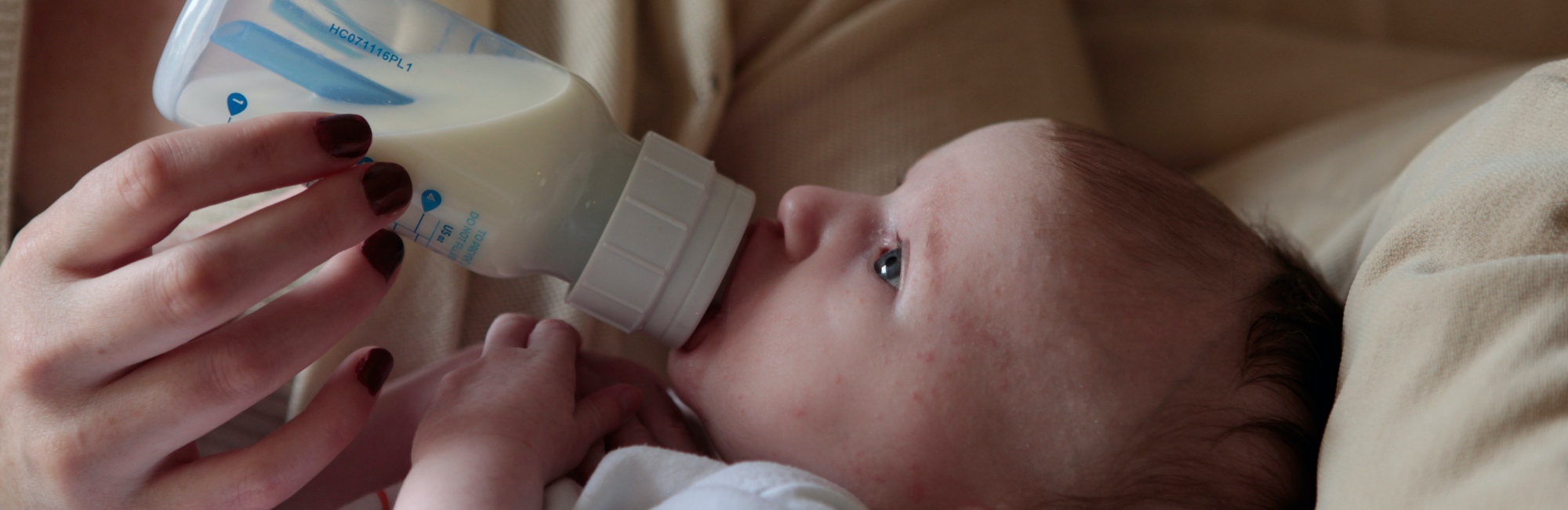
How to transition from predominantly feeding your baby with expressed breast milk to predominantly direct breastfeeding

When your baby is exclusively fed with your expressed breast milk and gaining weight well
I often say to women: your baby is your best pump. (Before I say this, I make sure that the underlying fit and hold or conditioned dialling up problems have been addressed!)
If your baby is gaining weight well and receiving only your breast milk, the vital question for us is: why isn't your baby your best pump? Why do you still need to remove milk from your breasts mechanically and feeding it to your little one in a bottle (or supplementer or however you're doing it)? It is such hard work, that women are very keen to stop pumping as soon as possible - but of course are also very concerned about the things that might go wrong if they stop.
If your baby is preterm, or has a diagnosed medical or neurological condition, or a true classic tongue tie which requires a frenotomy, then your baby's suck is likely to be weak, or at least affected. However, these are only occasionally relevant.
Otherwise, if your baby is gaining weight well and is receiving only your own milk by bottle feeds, then there is every reason to think that you can successfully transition to exclusively and directly breastfeeding, once the underlying problem (e.g. of nipple pain or a conditioned dialling up at the breast) which caused you to have to pump has been dealt with.
You know that you are producing all the milk that your baby needs when your baby is thriving on only your own milk. The way a baby sucks is dependent on the way the baby is held to the woman's body, as long as those three conditions listed above are excluded. Despite what you hear, the research shows that babies don't learn abnormal neuromuscular patterns or a dysfunctional suck from teat use (because infant suck is context-dependent). Term babies without genuine neurological conditions don't have 'weak' suck, even though there is a spectrum of pressures created with the jaw drop during sucking in healthy babies. Your baby's jaw only needs to draw, and the tongue follows: what matters is that no breast tissue drag is interfering with the amount of nipple and breast tissue your baby can draw up.
Sometimes it can help to imagine what you'd do if you had a prolonged power outage
Here's what I'll often say to a woman who is in your situation, once I'm happy that we've dealt with the initial underlying problem, that the woman has a stable fit and hold when breastfeeding without pain, and there is no conditioned dialling up by the baby. That is, I'll use these ideas once I've formed the view that it's clinically safe to do a transition back to direct breastfeeding.
"I'd just like to start by saying I'm not suggesting that we do anything too suddenly here. Only you will be able to know, hour by hour, day by day, what is right for you and your baby, what feels manageable to you. My job has been to help you sort out the problem that resulted in the pumping, and then to make sure you feel well-informed, as you start to experiment with changes in the way you feed your baby.
But ... imagine that there is some kind of crisis and the power goes out for a few days, and you can no longer use your electric breast pump. Of course, in this scenario I suppose you could always hand express or find a manual breast pump. Let's say those options aren't available to you, for various reasons!
I think you and your baby would be fine. I could be wrong, but because she's thriving on your milk, and we know she can breastfeed from you now without the problems that we had before, I think she'd be fine. She might be unsettled for a couple of days, while she's learning new things.
It would be important to practice having days out of the house very full of rich and changing sensory motor nourishment, as you offer the breast whenever you think it might dial your baby down - never worrying that you just fed, knowing you can't overfeed her. Some breastfeeds would be short, others would be long. But over a 24 hour period, she will take what she needs, if you're happy to offer frequently and flexibly.
If she doesn't seem to want the breast, use your other tool, a change of sensory experience, to dial her down.
I hope the power doesn't go out, because it can be quite scary when you've had weight gain worries in the past to be forced into a sudden transition. But perhaps this analogy will give you confidence to experiment with going for longer and longer stretches of only direct breastfeeding, until you realise you can get through the days and nights only using your breast - and that it's so much easier and more enjoyable, after all the hard work you've put in to reach this place."
Please consult with your own local breastfeeding support professional if you are transitioning back to direct breastfeeding and have any breastfeeding problems, including concerns about weight gain, or about nipple pain or damage, or about a conditioned dialling up at the breast. The advice on this page does not substitute for help from your local registered health professional.