Does your baby pull off the breast because the letdown is overactive or too strong + will leaning back during feeds help?
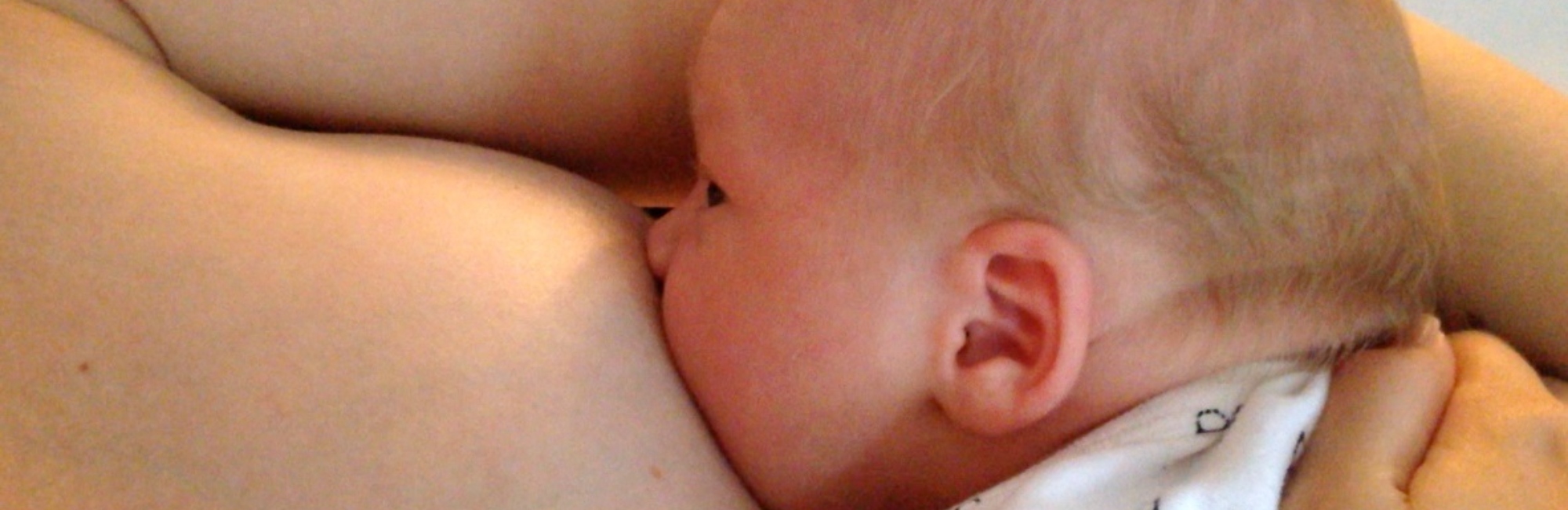
When babies are positionally stable at the breast, they don't usually pull off because the letdown is too strong
Newborns often cough and splutter with breastfeeds, once their mother's milk comes in, and will pull off the breast if they are having trouble getting organised. This is normal, and is not a cause for concern, as long as you know how to position your baby in a way that is stable at your breast. You simply wait for your baby to reflexly clear her airway (she knows how to do this with those coughs and splutters), and then start again.
After the first few weeks though, a baby can typically manage his mother's letdowns without pulling off, even when her breast is full of milk and the letdown is vigorous - as long as
-
His head and neck aren't tilted forward or rotated off to the side
-
His body and spine are aligned and stable
-
He doesn't have breast tissue dragging away your breast tissue away from the vacuum he is creating inside his mouth.
I often see women who've been told that their baby is fussing and pulling off your breast because their letdown is too strong, and the baby can't cope. But as soon as we work together with the gestalt method, the baby stays deeply relaxed at the breast, even when there is audible gulping with the letdown.
Your milk might spray even up to thirty centimetres out from your breasts during a letdown. It's best to let your milk run free or into your breastpad if you're wearing a bra, rather than press in over your nipple and breast to suppress the letdown spray, because pressure over your breast and ducts could cause a backpressure that increases your risk of a mastitis.
Leaning back during breastfeeding doesn't affect your letdown - but often improves fit and hold
There are two reasons why milk flows from your breasts out through your nipple orifices into your baby's mouth. Both of these are mechanical forces. They are
-
The contraction of the smooth muscle or myoepithelial cells which surround your milk glands when a wave of oxytocin floods over them, and
-
The vacuum generated inside your baby's mouth when her jaw drops (and her tongue follows).
Sometimes, your milk glands will contract even when your baby isn't breastfeeding. Also, the rhythmic sucking vacuums inside your baby's mouth draw small volumes of milk from your ducts even when you don't have a letdown. (You'll experience this as something like a suck-suck-suck-suck-suck-suck-swallow in your baby.) But the biggest transfer of milk occurs when letdown coincides the baby's jaw drops at the breast. (You'll experience this as something like suck-swallow-suck-swallow-suck-swallow-suck-swallow.)
Milk transfer during breastfeeding is neither hurried up nor slowed down by gravity. Gravity doesn't impact upon the flow of milk at all. But gravity does affect the way your breasts fall, and where your nipples look.
-
You can find out about your breast fall here.
-
You can find out about the directions nipples look here.
The reason why breastfeeding often seems to go better when you lean back in the chair is that this position opens up your lap, and affects the way baby fits into your body. The semi-reclined position better exposes the landing pad of your breast for your baby's face-breast bury, and helps eliminate breast tissue drag. This is why babies often fuss less at the breast when you are semi-reclined - not because gravity is slowing down your milk ejection reflex.