Things to know about as you pump your milk: occupational fatigue, mastitis, microbiome and nutrient changes, odour, milk crust
Occupational fatigue
Pumping is both a profoundly embodied expression of love for your child, and a pragmatic, repetitive, tedious task. There is a kind of heroism in it, actually, of commitment and endurance. This is still not well understood or celebrated in our world.
Pumping can be very hard work. You might even be exclusively pumping, if your breastfeeding problems have not been resolveable. Pumping can result in high levels of occupational fatigue, especially it goes on for a while. This fatigue is one of the reasons women say they need to stop pumping and change their baby to commercial milk formula.
Mastitis
It's best not to regularly pump more milk than your baby needs in a 24 hour period, as tempting as it is to build up a store of your milk in the freezer. This is because we know from the research that a woman who is making substantially more milk than her baby needs is more likely to develop mastitis.
Researchers have found that even women who are directly breastfeeding but also pumping a few times a day have an increased risk of mastitis.
Microbiome change
Breast milk is rich in beneficial bacteria. Expressed breast milk has been found to have a somewhat different microbiome profile, which is not surprising since a woman's milk microbiome is constantly interacting with the environment, either through the baby's mouth at the breast or the pump kit. Storage of the expressed breast milk also impacts upon the milk microbiome.
Although research has found these changes, this needs to be held in perspective - there is no suggestion that these microbiome changes will impact negatively upon the baby.
Pastuerisation, which occurs in milk banks, eliminates the milk microbiome as a side-effect of ensuring donor milk safety.
Nutrient change
It's true that there will be some changes in nutrient content in the milk your baby receives from pumping compared to directly from your breast. Storage including freezing also impacts on the immune and bioactive content of your breast milk. This doesn't have measurable effects on your baby though.
Odour
After your milk has been stored in the freezer for a time, you might notice that it smells off when you thaw it. This milk is still safe to offer your baby, and the odour doesn't mean that the milk tastes off, although sometimes you might find your baby refuses it anyway.
The smell is a result of the way freezing affects the fat globules carried inside your milk. Membranes wrapping around the fat globules can break down as storage progresses, which means that the fat or lipid is then able to be digested by the lipase enzymes which are naturally found in your milk. Free fatty acids result. They oxidise, which can cause a rancid flavour, even though these increased levels of free fatty acids are harmless to your baby.
Most stored breast milk eventually ends up with an odour over time. If your baby rejects it, it's best to just accept that there is usually an element of wastage when storing human milk. Thaw another packet and try again!
If you take fish oil, it's likely to make this kind of odour more prominent in your stored breast milk. Again, that doesn't mean that you have to change anything.
Milk crust of the nipples
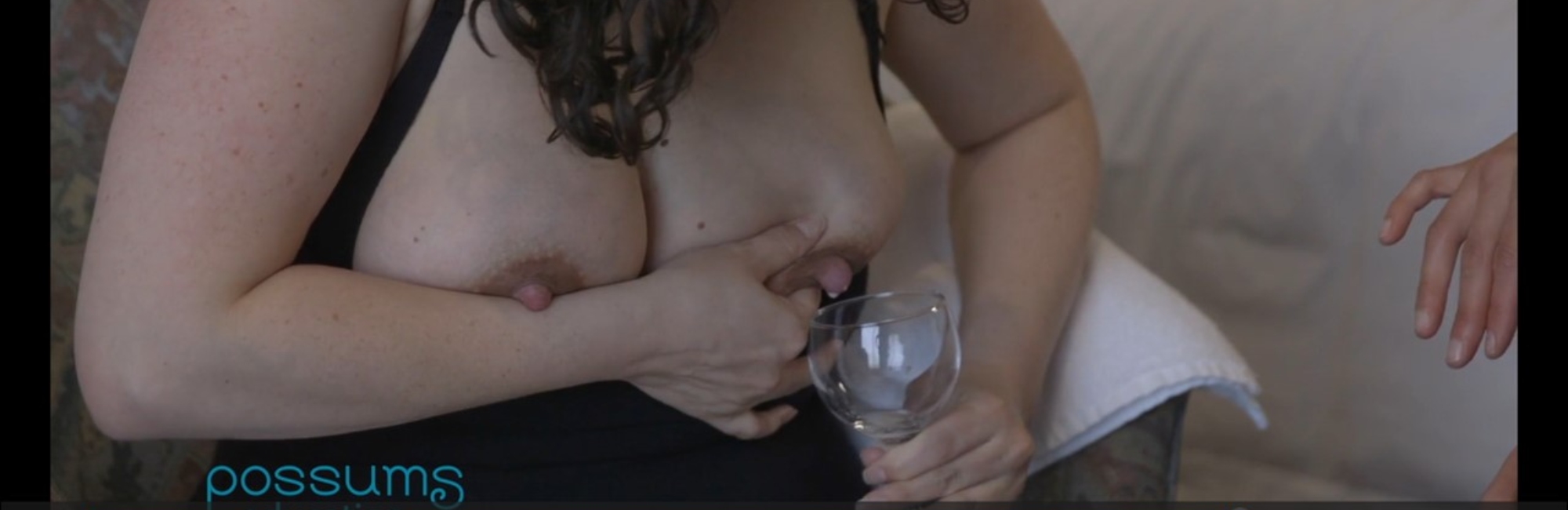
You might have developed a raised crust on the face of your nipples from exclusively pumping, which is usually painless. It's best just to leave this alone. A milk crust like this seems to be a protective thickening of the epidermis or outer skin of your nipple, in response to the constant exposure to the mechanical effect of vacuum pressure.
Sometimes you'll hear this crust referred to as a dysbiosis but that is misleading. It's not caused by changes in the nipple microbiome (which is invisible). Sometimes you'll hear it referred to as a result of hypoxia but again, this doesn't make sense biologically.
If the milk crust is accompanied by pain, then you may consider a range of strategies.
-
Is it possible to use a lower setting, even though pumping seems less efficient?
-
Are you checking to make sure that the nipple doesn't rub on the flange?
-
Are you holding the bottles to make sure that there isn't nipple or breast tissue drag whilst pumping?
One way to decrease repetitive microtrauma from exclusively pumping is to hand express one breast whilst using the pump on the other. You might start by pumping both sides through the first let-down, then alternating the pump whilst using the free hand to manually express from the other breast. This helps limit the amount of time your nipples are exposed to the mechanical effects of the vacuum.
Selected references
Ames SR, Lotoski LC, Azad MB. Comparing early life nutritional sources and human milk feeding practices: personalized and dynamic nutrition supports infant gut microbiome development and immune system maturation. Gut Microbes. 2023;15(1):2190305.
Cullinane M, Amir LH, Donath SM, Garland SM, Tabrizi SN, Payne MS, et al. Determinants of mastitis in women in the CASTLE study: a cohort study. BMC Family Practice. 2015;16:181.
Moossavi S, Sephehri S, Robertson B. Composition and variation of the human milk microbiota are influenced by maternal and early-life factors. Cell Host & Microbe. 2019;25:324-335.
Nardella D, Canavan M, Sharifi M, Taylor S. Quantifying the association between pump use and breastfeeding duration. Journal of Pediatrics. 2024;274(114192):https://doi.org/10.1016/j.jpeds.2024.11419.
Pitino M, Stone D, O'Connor D, Unger S. Is frozen human milk that is refused by mother's own infant suitable for human milk bank donation? Breastfeeding Medicine. 2019;14(4):271-275.
Reyes SM, Allen DL, Williams JE. Pumpng supplies alter the microbiome of pumped human milk: an in-home, randomized, crossover trial. American Journal of Clinical Nutrition. 2021;114:1960-1970.
Silpe JE, Damian-Medina K, Bassler BL. Food-derived compounds extend the shelf-life of frozen human milk. BioRxiv. 2025(preprint):doi: https://doi.org/10.1101/2024.1112.1111.627965.
Woortman MA, Barrett ES, O'Connor TG, Gill SR, Scheible K. Feeding expressed breast milk alters the microbial network of breast milk and increases breast milk microbiome diversity over time. Microorganisms. 2025;13(12):https://doi.org/10.3390/ microorganisms13010012.