
The exhortation 'breast is best' doesn't help (and might do harm) - breastfeeding women just need more effective clinical help, so they can truly enjoy their babies!
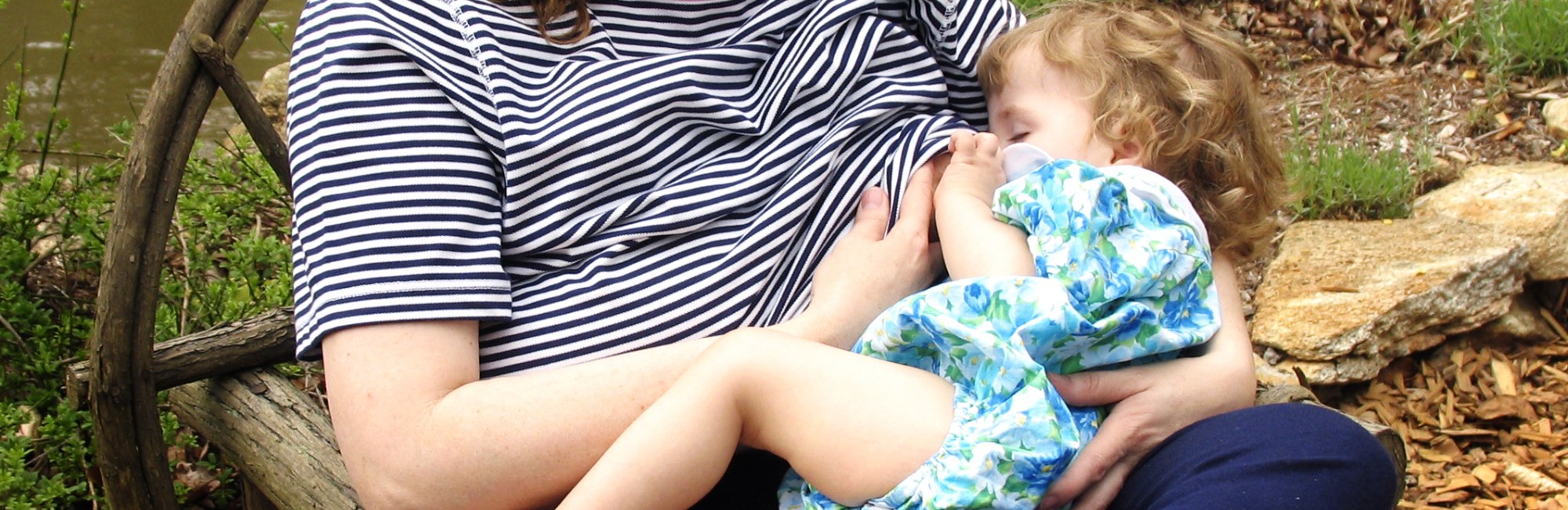
Here are some reflections on the 'breast is best' campaigns. What do you think?
The research is clear: human milk has cumulative positive effects upon both maternal and infant health long term. We consider these benefits elsewhere in Possums Breastfeeding & Lactation.
Some researchers argue that the negative effects of commercial milk formula for infants in high income countries are regularly overstated by breastfeeding advocates, for ideological reasons. It's true that the risks of commercial milk formula use in low and middle income countries need to be considered separately from high income countries. Less effective and less accessible health systems (that is, unconscionable global health system inequity) make infants in low and middle income countries, or in disadvantaged populations in high income countries, much more vulnerable to the deletious health impacts of commercial milk formula use, particularly infection.
In the NDC Networks, intellectual engagement and debate is welcomed - we don't need to shy away from discussions such as these! Here's some controversial things to think about.
-
Do you think it's true that the health benefits of breastfeeding, as demonstrated in the research, are sometimes exaggerated by breastfeeding advocates in high income countries in order to reinforce ideologically-driven narratives, such as that women 'should' breastfeed if they can, that breastfeeding is 'natural', that 'breast is best'? In my experience, the belief that breastfeeding is 'natural' and that 'breast is 'best' remain widespread in breastfeeding advocacy circles, and contribute to widespread and damaging mother-blaming and internalised mother-guilt amongst contemporary mothers. Surely the breast can only be best if breastfeeding doesn't harm to either the mother or baby. Sometimes - for complex reasons, typically related to devastating health system blind spots - breastfeeding is associated with harm. What do you think, drawing on your own experiences?
-
Is it possible that ideological narratives are reinforced by the prominence of single issue professional or parent-facing breastfeeding advocacy organisations, whose title names identify with breastfeeding alone? I propose that breastfeeding is evolutionarily fundamental and therefore optimal for infant development; breastfeeding interacts fundamentally with all infant care and parent-baby domains; and breastfeeding therefore needs to be considered from a systems perspective as integral to, and in interaction with, all relevant parent-baby care domains if we are to support optimal developmental outcomes - which is what we're aiming to do in NDC or the Possums programs.
Here are further controversial reflections on our single-issue breastfeeding non-profits. What do you think?
It seems to me that the single-issue focus on breastfeeding in dominant or establishment breastfeeding and lactation organisations has given rise to a backlash, in some quarters, against breastfeeding advocacy and activism. An example of this might be the Fed is Best Foundation. Yet surely in the world we all want, everyone would be working together to optimise outcomes for mother-baby pairs, which inevitably includes optimising breastfeeding outcomes - without the need for a Fed is Best movement? The Fed is Best Foundation meets the needs of families who feel excluded by single-issue breastfeeding and lactation support and advocacy non-profits. Instead of condemning the Fed is Best movement, or 'cancelling' it, both of which regularly occur in breastfeeding advocacy circles, we need to be embracing debate and discussion about difficult issues with enthusiasm, respect, and intellectual rigour.
In my view there has been an important historical role for single-issue breastfeeding organisations, but I also formed the view early on in my career that the way of the future is a multi-domain approach to infant care and family well-being, built on the foundational significance of breastfeeding and its interaction across all domains (sleep, cry-fuss problems, sensory motor needs, perinatal and infant mental health). In this way, the use of commercial milk formula, when necessary, is understood to mimic breastfeeding as closely as possible, and no parent or carer is excluded from evolutionarily-aligned, heart-centred care.
For these reasons, in the Possums or Neuroprotective Developmental Care programs (starting from way back when all high profile breastfeeding advocates were using the adage 'breast is best') we talked only about breastfeeding for enjoyment, breastfeeding for making the days and nights as easy and as enjoyable as possible. This is why, in my PhD, I focussed on the concept of maternal 'jouissance'.
Personally, I've never claimed that 'breast is best', nor advocated the benefits of human milk to patients in the clinic (though I do my best to explain the facts when asked, keeping them in perspective and aligned with the research). I have never recommended that health professionals advocate the benefits of breastfeeding when assisting breastfeeding pairs. I have publicly disagreed with the outdated belief, which is thankfully less prevalent now, that mothers introduce formula because they 'fail to persist'.
I've always had the view that if our health systems were better able to resolve clinical breastfeeding problems, breastfeeding rates would increase - simply because breastfeeding then becomes the easiest and most enjoyable way to live life with a baby!