NDC neurobiological model: why parent-infant biobehavioural synchrony in the first 100 days matters for optimal developmental outcomes
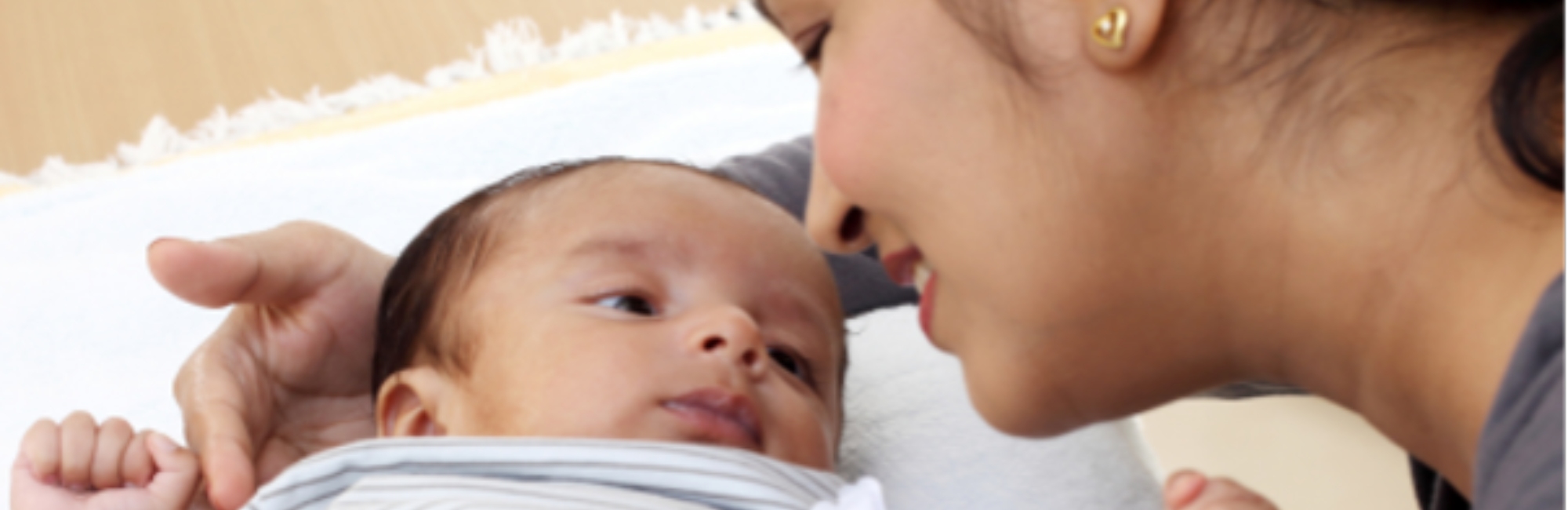
Biobehavioral synchrony integrates psychosocial and biological models of parent-infant interaction
Feldman’s theory of parent-infant biobehavioral synchrony integrates psychosocial and biological models of parent-infant co-regulation, in order to describe interactions which optimise secure psychological attachment and other long-term developmental outcomes.1, 2 This paper uses the term biobehavioral synchrony to refer to reciprocal motor and multi-sensory parent-infant exchanges, integrating behavioral observation and parent-reported psychosocial experience with neural and physiological correlates. Biobehavioral synchrony significantly expands upon the concept of synchrony used in social communication models of ASD etiology.3 Biobehavioral synchrony stabilizes the myriad physiological, neural, and behavioral feedback loops that operate within the complex adaptive system of parent and infant.
To give one example, biobehavioral synchrony between a parent and newborn occurs during contact with a carer’s body and skin. This early proximity, known as skin-to-skin contact, comprises rich and complex sensory-motor stimulation for the infant, and supports both positive parent affect and early infant experience of secure psychological attachment. Skin-to-skin contact improves glucose and oxygen levels, downregulates the infant’s autonomic nervous system, including heart and respiratory rates, and improves breastfeeding outcomes due to sensory-motor activation of mammalian reflexes.4
NDC is built from an interdisciplinary synthesis of heterogenous studies investigating infant dysregulation, stress, and parent-infant biobehavioral synchrony. Infant dysregulation may be caused by, and may cause, disrupted parent-infant biobehavioral synchrony. Both parent and infant stress may disrupt parent-infant biobehavioral synchrony, and each may also result from disrupted parent-infant biobehavioral synchrony. In this way, disruptions to parent-infant biobehavioral synchrony in very early life may trigger a butterfly effect of multi-directional cascades of impaired cognitive, social, emotional and self-regulatory skills in ASD susceptible children.
Cued care or responsive care
In very early life, an infant signals or cues his or her biological needs e.g. for milk, or for richer sensory-motor experience, through affect-driven motor behaviors and autonomic cues. Motor behaviors include spinal extension or writhing spinal movements, postural changes, grimaces, and non-speech-like vocalisations, including groans and cries. Autonomic cues include reddened face, increased respiratory rate, and tremors. An infant increases intensity of signalling along a spectrum of SNS-HPA arousal, from mild agitation to screaming.
‘Cued care’ has also been known as ‘responsive care’ or ‘attunement’, and refers to parenting behaviors which respond to infant cues. Cued care is the foundational behavioral mechanism underlying parent-infant biobehavioral synchrony.5-9 The care-giver aims to downregulate the infant’s SNS-HPA axis and meet the infant’s needs for safety, nutrition, and loving human-mediated sensory-motor nourishment, by providing eye-contact, touch, and sounds, including speech and song, and also by providing non-human sensory-motor nourishment, such as opportunities for experience of the complex non-human natural environment. Milk and sensory-motor enrichment upregulate the parasympathetic nervous system (PNS), which downregulates the SNS. Downregulation of the SNS-HPA axis facilitates learning and joint attention, as well as cognitive and social processes.10
Extinction of cues may occur when the infant does not receive adequate responses to his or her communications, a process elucidated in the operant conditioning principles of the first wave of the school of behaviorism (FWB), which has been widely applied in infant-care from the mid-twentieth century. The rate at which infant cues are extinguished may also depend on an infant’s underlying genetic or biological susceptibility.
Behaviorally hypo-aroused infants offer minimal cues and are at particular risk of cue extinction. That is, they may quickly respond to SNS-HPA hyperarousal with ‘learned helplessness’. Minimal cues result in less parental engagement, shortened reciprocity chains, and less opportunities for joint attention, reinforcing the extinction of cues. For these behaviourally hypo-aroused infants, cued care from birth protects against cascades of disrupted development.10
Reciprocity chains
Reciprocity chains refer to back-and-forth exchanges which incorporate infant responses to parent-initiated communication as well as parental responses to infant-initiated cues. Behavioral reciprocity chains build on cued care, resulting in parent-infant biobehavioral synchrony. Cues from the infant, including affect-driven movements towards the parent, and sensory-motor and speech responses from the parent, including co-ordination of gaze, downregulate and organise the infant’s autonomic, motor, and attentive states. Reciprocity chains also facilitate lactation and downregulate parental stress responses, and are driven by the powerful evolutionary drive for mutual enjoyment.
Between the age of 2-3 months, specific combinations of interactive behaviors become more frequent and turn into constellations of behaviors. From a complexity perspective, these are ‘attractor states’, recurring patterns that shape neural networks. In the second half of the first year of life, sensory-motor reciprocity chains are increasingly organized, symbolic, and complex, evolving into protophones and verbal communications, although the capacity to perceive and respond to complex non-verbal sensory-motor communication remains foundationally important for social communication throughout life.
Parent-infant biobehavioral synchrony, or enjoyment of increasingly long and complex sensory-motor reciprocity chains, is necessary from birth in order to protect cognitive, language, and social communication development.11 The NDC neurobiological model of infant development proposes that very early life motor or sensory-motor lesions (functional or structural) disrupt biobehavioral synchrony, either resulting in, caused by, or perpetuated by chronic SNS-HPA hyperarousal. The resultant shortened, less complex reciprocity chains may trigger cascades of atypical sensory processing, motor skills, language, and cognition.
For example, at 4 months of age, the optimal interactive structure comprises a predominance of ‘infant-leads-mother-follows’, but this is less likely to be found with high-risk siblings who have another family member diagnosed with Autism Spectrum Disorder, even though maternal responsivity, scaffolding, and linguistic input are the same. By 6 months of age, high-risk siblings demonstrate attenuated social attention and fewer speech-like vocalizations. Although some parents may respond in the second half of the first year of life to minimal infant cuing with disengagement and decreased gaze, other parents of high-risk siblings, in their concern, may become directive, attempting to impose attentional shift and scaffold communicative behaviors. Unfortunately, either pattern may perpetuate a cascade of impaired social development in susceptible infants. The research suggests that ‘undemanding synchrony’, a pattern of noticing and responding to the infant’s cues without attempting to control, is the optimal parent response.12
How to optimise parent-infant biobehavioral synchrony
The first step to optimal parent-infant biobehavioral synchrony is the elimination of clinical disruptors, which allows attention to the small communications of the infant to emerge. NDC addresses these clinical disruptions in the domains of infant cry-fuss problems, sleep, breastfeeding and feeding problems (briefly addressed below), inadequate environmental enrichment to meet the infant’s sensory motor needs, and perinatal and infant mental health.
The second step is to encourage attention to the present moment and prioritise the carer’s enjoyment of life with the baby. For this reason, NDC or the Possums programs integrate strategies from Acceptance and Commitment Therapy and Compassionate Mind Training (self-compassion).
Unidentified and unmanaged breastfeeding and unsettled infant behavior problems increase risk of maternal postnatal depression
Cry-fuss problems, poor maternal sleep efficiency, and breastfeeding problems are key modifiable risk factors for post-natal depression.13-17 Each of these may arise from, or be exacerbated by, a mismatch between popular sociocultural and clinical approaches, and infant biology. Health professionals report inadequate training in management of breastfeeding and unsettled infant behaviour problems, and often recommend approaches which have been shown not to help, or may even worsen these problems, with associated deleterious effects on parent-infant biobehavioral synchrony.18-30
There is widespread recognition of the importance of prevention of, or early detection and treatment of, perinatal anxiety and depression, the most common mental health condition post-birth. Winnicott proposed that a state of maternal preoccupation or heightened sensitivity develops toward the end of pregnancy and lasts throughout the postpartum period. From an evolutionary perspective, this heightened state supports a woman’s ability to anticipate her infant’s needs and to respond to her infant’s unique cues, and may include anxious, hypervigilant and intrusive thoughts about the infant. In contemporary contexts, often characterised by minimal social support, the same heightened state increases her risk of postnatal anxiety and depression if infant behaviour problems emerge.
References
- Feldman R. The neurobiology of mammalian parenting and the biosocial context of human caregiving. Hormones and Behavior. 2016;77:3-17.
- Feldman R. Parent-infant synchrony and the construction of shared timing: physiological precursors, developmental outcomes, and risk conditions. Journal of Child Psychology and Psychiatry. 2007;48(3).
- Green J, Charman T, Pickles A, Wan MW, Elsabagh M, Slonims V, et al. Parent-mediated intervention versus no interventon for infants at high risk of autism: a parallel, single-blind, randomised trial. The Lancet. 2015;2:133-140.
- Moore ER, Berman N, Anderson GC, Medley N. Early skin-to-skin contact for mothers and their healthy newborn infants. Cochrane Database of Systematic Reviews. 2016(Issue 11. Art. No.: CD003519):DOI: 10.1002/14651858.CD14003519.pub14651854.
- Swain JE, Konrath S, Dayton CJ, Finegood ED. Toward a neuroscience of interactive parent-infant dyad empathy. Behavioral and brain sciences. 2013;36:438-439.
- Mansfield AK, Cordova JV. A behavioral perspective on adult attachment style, intimacy, and relationship health. In: Woods D, Kanter J, editors. Understanding behavior disorders. Oakland CA: Context Press; 2007. p. 389-416.
- Fogel A, King BJ, Shanker SG. Human development in the twenty-first century: visionary ideas from systems scientists. New York: Cambridge University Press; 2008.
- Shonkoff JP, Phillips DA, editors. From neurons to neighbourhoods: the science of early childhood development. Washington: National Academy Press; 2000.
- Matas E, Bock J, Braun K. The impact of parent-infant interaction on epigenetic plasticity mediating synaptic adaptations in the infant brain. Psychopathology. 2016;49:201-210.
- Greenspan S. The Affect Diathesis Hypothesis: the role of emotions in the core deficit in autism and in the development of intelligence and social skills. Journal of Developmental and Learning Disorders 2002;5(1):1-44.
- Britto PR, Lye SJ, Proulx K, Yousafzai A. Nurturing care: promoting early childhood development. Lancet. 2017;Advancing early childhood development: from science to scale 2.
- Green J, Pickles A, Pasco G, Bedford R, Wan MW, Elsabbagh M, et al. Randomised trial of a parent-mediated intervention for infants at high risk for autism: longitudinal outcomes to age 3 years. Journal of Child Psychology and Psychiatry. 2017;58(12):doi:10.111/jcpp.
- Stein A, Pearson RM, Goodman SH, Rapa E, Rahman A, McCallum M, et al. Effects of perinatal mental disorders on the fetus and child. Lancet. 2014;384:1800-1819.
- Tsivos ZL, Calam R, Sanders MR, Wittkowski A. Interventions for postnatal depression assessing the mother-infant relationship and child develomental outcomes: a systematic review. International Journal of Women's Health. 2015;23:429-447.
- Vik T, Grote V, Escribano J, Socha J, Verduci E, Fritsch M, et al. Infantile colic, prolonged crying and maternal postnatal depression. Acta Paediatr. 2009;8:1344-1348.
- Dias CC, Figueiredo B. Breastfeeding and depression: a systematic review of the literature. Journal of Affective Disorders. 2015;171:142-154.
- Werner EA, Miller M, Osborne L, Kuzava S, Monk C. Preventing postpartum depression: review and recommendations. Archives of Womens Mental Health. 2015;18(1):41-60.
- Gavine A, MacGillivray S, Renfew MJ, Siebelt L, Haggi H, McFadden A. Education and training of healthcare staff in the knowledge, attitudes and skills needed to work effectively with breastfeeding women: a systematic review. International Breastfeeding Journal. 2017;12(6):DOI 10.1186/s13006-13016-10097-13002.
- Price AM, Wake M, Ukoumunne OC, Hiscock H. Outcomes at six years of age for children with infant sleep problems: longitudinal community-based study. Sleep Medicine. 2012;13 991-998.
- Price A, Quach J, Wake M, Bittman M, Hiscock H. Cross-sectional sleep thresholds for optimal health and well-being in Australian 4-9-year-olds. Sleep Medicine. 2015:doi:10.1016/j.sleep.2015.1008.1013.
- Mindell J, Lee C. Sleep, mood, and development in infants. Infant Behaviour and Development. 2015;41:102-107.
- Pennestri M-H, Laganiere C, Bouvette-Turcot A-A, Pokhvisneva I, Steiner M, Jeaney MJ, et al. Uninterrupted infant sleep, development, and maternal mood. Pediatrics. 2018;142(6):e20174330.
- Kempler L, Sharpe L, Miller CB, Bartlett DJ. Do psychosocial sleep interventions improve infant sleep or maternal mood in the postnatal period? A systematic review and meta-analysis of randomised controlled trials. Sleep Medicine Reviews. 2016;29:15-22.
- Douglas P, Hill PS. Behavioural sleep interventions in the first six months of life do not improve outcomes for mothers or infants: a systematic review. J Dev Behav Pediatr. 2013;34:497–507.
- NHMRC. Report on the evidence: promoting social and emotional development and wellbeing of infants in pregnancy and the first year of life. http://www.nhmrc.gov.au: Australian Government, 2017.
- Bryanton J, Beck C, Montelpare W. Postnatal parental education for optimizing infant general health and parent-infant relationships. Cochrane Database Syst Rev. 2013(11):CD004068. DOI: 004010.001002/14651858.CD14004068.pub14651854.
- Etherton H, Blunden S, Hauck Y. Discussion of extinction-based behavioral sleep interventions for young children and reasons why parents may find them difficult. Journal of Clinical Sleep Medicine. 2016;12(11):1535-1543.
- Blunden S, Etherton H, Hauck Y. Resistance to Cry Intensive Sleep Intervention in Young Children: Are We Ignoring Children’s Cries or Parental Concerns? Children. 2016;3(2):8.
- Rimer R, Hiscock H. National survey of Australian paediatricians' approach to infant crying. Journal of Paediatrics and Child Health. 2014;50:202-207.
- Thompson RE, Kruske S, Barclay L, Linden K, Gao Y, Kildea SV. Potential predictors of nipple trauma from an in-home breastfeeding programme: a cross-sectional study. Women and Birth. 2016;29:336-344.
References
The references for this article are in the research publication found here.