
Exclusively or predominantly pumping: what the research tells us about how and why women do it
Gridneva et al 2025
Study extracts and summary
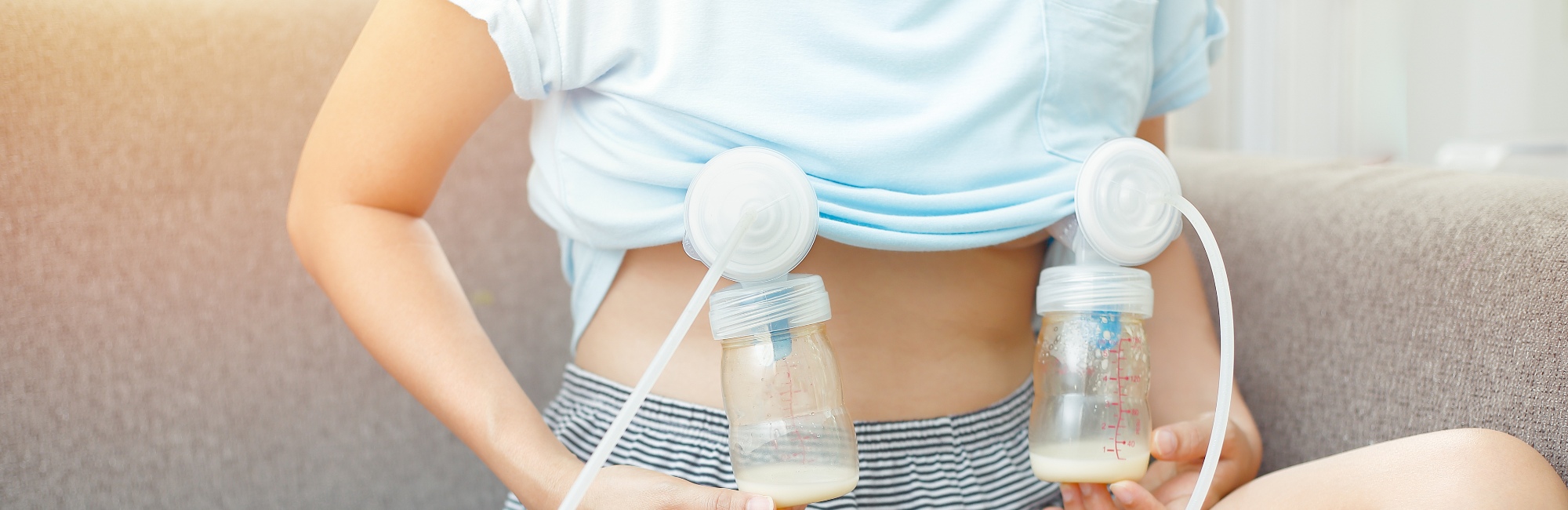
Although pumping is inconvenient and time intensive, predominantly (PP) and exclusively (EP) pumping mothers use breast expression to provide milk for their infants and to ensure their supply. This study assessed 93 PP and EP mothers. Also, it compared 32 PP mothers with a reference group of n = 60 who pumped occasionally.
-
PP mothers had a higher frequency of pregnancy complicatons and breastfeeding difficulties compared to the general population. 58% of PP mothers reported perinatal complications, such as gestational diabetes (28%) or gestational hypertension (8%), and at least one maternal health condition (55%) including anxiety/depression (28%) and polycystic ovary syndrome (19%). Infant health conditions were reported in 21.5%.
-
Exclusive pumping does not alter 24 hour milk production and the amount of milk available to the infant. In EP mothers, the 24 h milk production was 1018 +/- 274 gm (range: 626-1682) which was significantly higher than in the reference group 792 +/- 219. 88.5% of EP mothers' infants consumed more than 600 g of EBM.
-
PP mothers had more milk ejections, longer active flow durations and lower milk removal efficacy ratios (probably due to use of lower vacuums) compared to the reference group of women who occasionally pumped.
-
PP mothers had the same time to first milk ejection, the same total flow durations, the same time to stop pumping, the same percentage of available milk removed, and the same comfort parameters compared to the reference group.
There are multiple reasons why mothers predominantly or exclusively pump, but the most common reasons are
-
Difficulty bringing baby on to the breast ('infant latching difficulties') (49%)
-
Nipple pain (41%)
-
Perceived low milk supply (40%).
Other reasons include
-
Congenital conditions
-
Preterm or sick infants who are too weak or unwell to feed directly athe breast
-
Maternal preference.
Even though the use of breast pumps is generally increasing, EP mothers are an underserved population.
In this study, mothers were selected who came to a 24 hour milk production of greater than 500 ml by 2 weeks postpartum, which is considered predictive of normal milk production even in mothers of vulnerable infants. Infant milk intake between one and six months of age is stable.
About a quarter of mothers with normal milk supply (including 20% of EP mothers) who were producing on average 739 and 781 gm of milk a day were still concerned about their milk supply.
Pattern of milk ejections is similar within women during breastfeeding and pumping. The milk ejection reflex is a robust physiological process.
Rosenbaum & McAlister 2024
Study extracts and summary
Integrative review of exclusively pumping mothers. Twenty-seven studies were selected from the search.
EP prevalence rate of at least 6.8% among breastfeeding families. Most of these parents receive practical and social support online.
Individual who are EP lack formal support and primarily use social media to guide their pumping practices.
EP is increasing among families encountering premature births and breastfeeding difficulties. Although time-consuming, it becomes easier over time.
Most women who chose EP originally planned on direct breastfeeding or combination feeding. They exclusively expressed because they enountered barriers such as
-
Latch or sucking issues
-
Flat or inverted nipples
-
Need to monitor the infant's intake
-
Insufficient milk supply.
They were more likely to have
-
Given birth preterm
-
Had a NICU newborn
-
Longer newborn length of stay in hospital
-
Twin birth
-
Cesarean birth.
Women who pumped immediately after birth and seven to nine times daily
-
Entered secretory activation earlier
-
Had higher milk volumes
-
More likely to have adeuate supply to feed their infant exclusive breast milk diet.
The most common reasons for discontinuing pumping were
-
Stress
-
Low milk supply
-
Returning to paid work
-
Pain
-
Time-intensive nature of pumping.
The authors noted a theme of maternal focus on increasing breast milk feeding duration by cfreating a stockpile.
References
Gridneva Z, Warden AH, McEachran JL, Perrella SL, Lai CT, Geddes DT. Maternal and infant characteristics and pumping profiles of women that rpedominantly pump milk for their infants. nutrients. 2025;17:366.
Rosenbaum K, McAlister B. An integrative review of exclusive breast milk expression. Journal of MIdwifery and Women's Health. 2024:doi:10.1111/jmwh.13713.