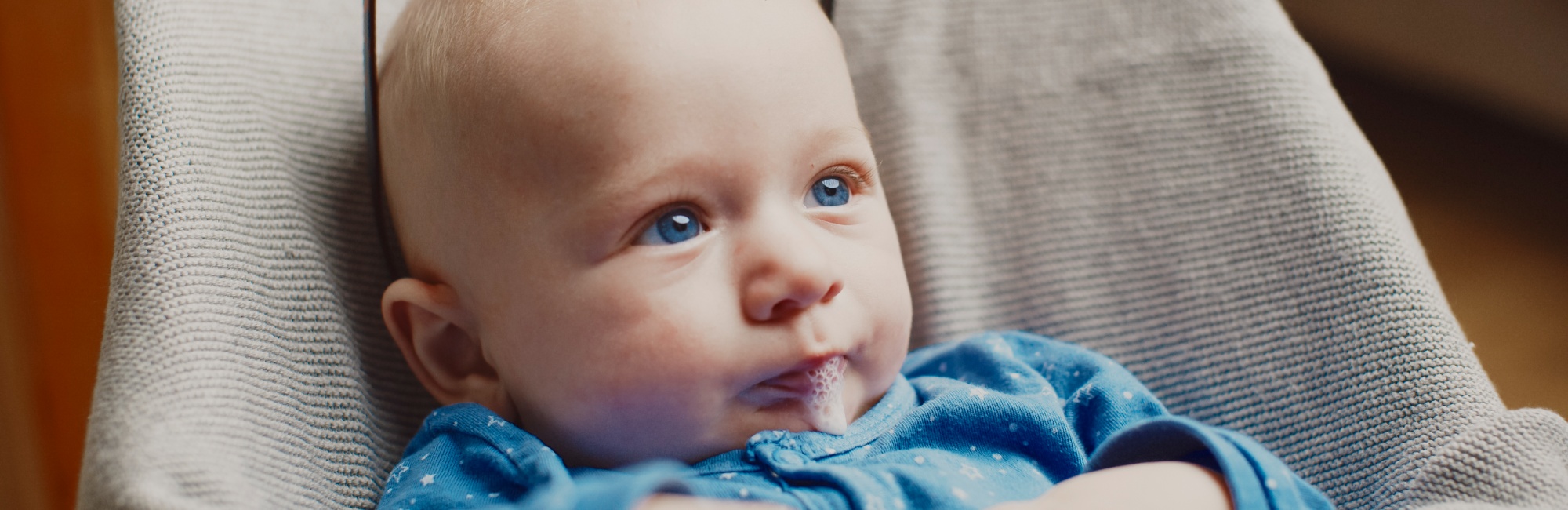
Labelling an infant's temperament risks unintended outcomes
Temperament should not be used by health professionals as an explanatory model for infant behaviour
In developing the Possums programs, I have specifically refrained from using the concept of temperament as an explanatory model for infant behaviour.
Temperament doesn't explain excessive crying in the first 16 weeks of life (since infants in most cultures don't cry for the same durations as in the West), and temperament doesn't explain excessive night waking, which is controlled by the settings of the circadian clock. Even waking every couple of hours at night should not be viewed as a sign of an 'orchid' temperament, but simply as part of the spectrum of biologically normal night waking, quite separate from the concept of tempermant which may play out as a lens through which the family views that child for the rest of that child's life.
Sometimes, as health professionals, it is tempting to use a label as a defence e.g. ‘I can’t help you any more because your baby is an orchid, it’s just her temperament’. This, however, poses significant risks for that child long-term.
The infant brain is exceptionally plastic at birth, and environmental influences are extraordinarily powerful and underestimated in our society. The concept of temperament remains subject to debate within developmental psychology, and although it is clear there are genetic influences, before all else environment sculpts neural pathways in the first weeks and months of life. It is damaging to a child and their family for clinicians to label infants, when their behaviour is subject to so many complex environmental influences.
If I notice parents labelling an infant, for example as difficult, I may, depending on the context, either carefully find ways to model or insert other ways of framing the baby’s behaviour. An example of this might be finding a casual and on the side way of framing the baby's behaviour as 'a very bright little thing - look at the way she is taking in what's going on! - with high sensory needs, which is a good thing. She's drinking in the world!'. I may reframe the way parents are understanding their baby's crying as 'sensitive right now'. Crucially, I use the metaphor of the dial on the sympathetic nervous system, so that we can talk about the baby being dialled up and our efforts to dial the baby down, without labelling and without projecting this behaviour into the future.
Sometimes parents talk about their little one's nature in a loving way. Sometimes I might comment as an aside that they change so much, don't they - right now we are seeing this, but goodness me how they change, soon you might be seeing that.
I never label a baby myself. I am aware of my power as a clinician to affect how parents see their little one, so I carefully offer parents in my behaviours and words a neutral way of framing the baby’s behaviour, at the same time as, without fail, I look for things to enjoy and celebrate in that little person in the room with us. This allows that incredibly complex and unknowable little personality, the mystery of the infant, to emerge in his or her own way, in his or her own unique family with all the family’s strengths and vulnerabilities, without me inadvertently causing damage becaues I'm unaware of the power that I hold as a clinician.
The concept of temperament is complex, and environmental factors have a very significant impact on not just how an infant's genes are expressed (and something like temperament has an extremely complex genetic inheritance) but also on trajectories of parent-infant interactions. Our role as health professionals is to remove the clinical obstacles that interfere with parent-infant interactions and responsive care, and to otherwise step out of the way, and allow the families to develop their own stories about the nature of their child.
Is distinguishing between orchid and the dandelion children helpful?
Dr Thomas Boyce, Professor Emeritus of pediatrics and psychiatry at the University of California, USA, coined the concepts of the orchid and the dandelion as descriptors of a child's temperament, characterising that child's resilience to environmental adversity as either orchid-like (less resilient) or dandelion-like (more resilient). This concept spread widely, at least for a time, and many infants who woke a lot at night, for instance, were characterised as orchids.
Dr Boyce writes that the terms "orchid" and "dandelion" child refer to a model of infant temperament where some children are highly sensitive and reactive to their environment (orchids), while others are more resilient and adaptable (dandelions). Orchid children thrive in supportive environments but can struggle in challenging ones, whereas dandelion children do well in a variety of conditions.
But as the daughter of an avid orchid grower, I know that orchids are far more resilient than dandelions. The dandelion flower lasts only a day or two before dying. An orchid flower typically blooms six to twelve weeks, with some lasting up to three months. Orchids have evolved to thrive in very challenging environments, too, unlike dandelions - so in my view these metaphors don't work!!
Practicing safely concerning the family's perception of their child
The safest way for a health professional to approach infant behaviour is to use the SNS-dial metaphor and the words 'sensitive right now' and to refrain from labelling temperament
I use the word 'sensitive' to describe a baby who has a conditioned dialling up at the breast or bottle, or who cries excessively in the first 16 weeks of life. I am careful to explain that a little one who is sensitive right now won't necessarily always be so sensitive - I mostly do this by using words such as 'sensitive right now', suggesting it's a temporary state.
There's not doubt that a child's temperament emerges over time, and may be evident from birth. However, there's also no doubt that environmental factors have a very large role to play in the shaping of infant disposition and temperament over time. As health professionals, it's not our role to begin to define this on behalf of the child, but to remove obstacles to that infant's flourishing during an exquisitely neuroplastic window of time in early life.
As health professionals, we need to be neutral in the way we interpret an infant's behaviours. We need to refrain from attributions of temperament. It's not our role to label. We need to refrain from characterising that little one according to our own perceptions, or according to our interpretations of the parent's stories. Labelling an infant, or attributing permanent characteristics to that child, can have a remarkably powerful and sometimes very negative influence on family perceptions of that child, and therefore the child's perceptions of herself, life-long.
References
Professor Stuart Shanker https://self-reg.ca/
Dr Thomas Boyce, "Why some children are orchids and others are dandelions", blog 2019.