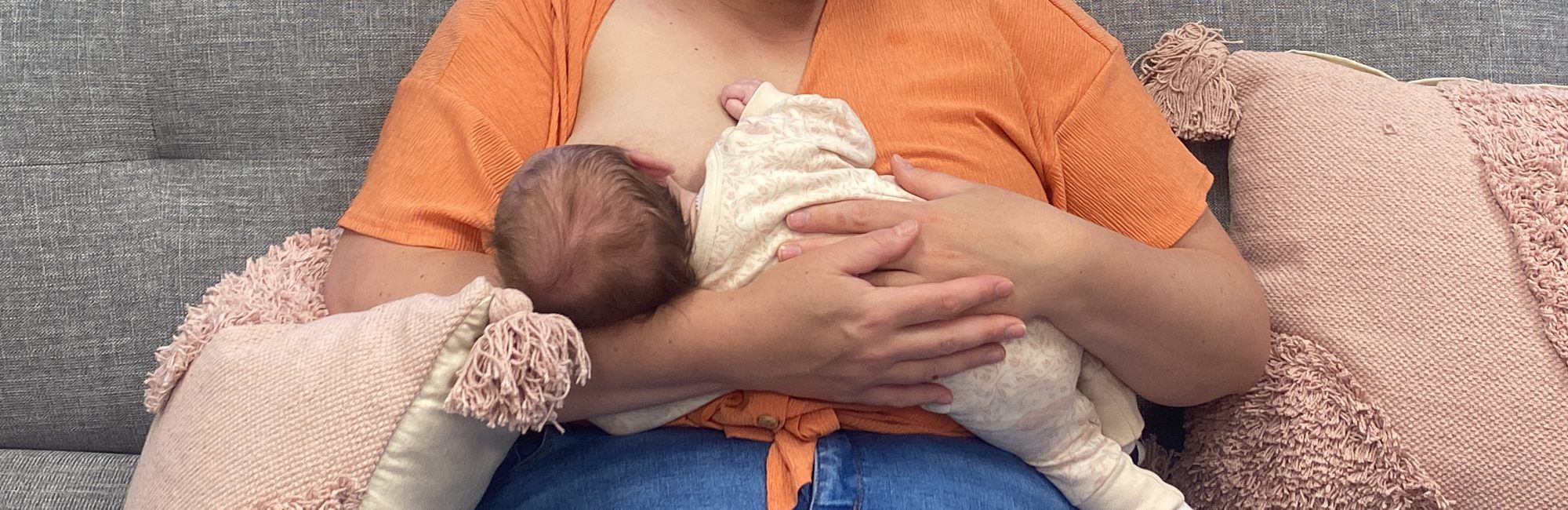
Podcast link + transcription part 2. Dr Nikki Mills and Dr Pamela Douglas discuss the functional anatomy of sucking and swallowing in breastfed babies
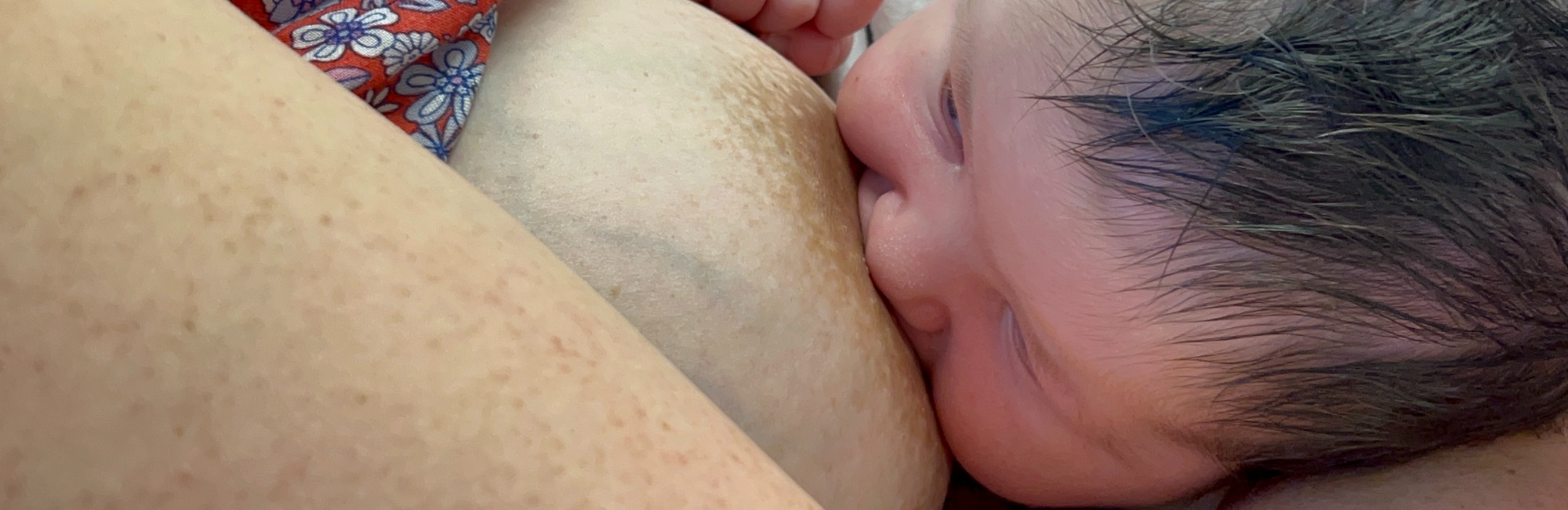
Dr Nikki Mills is a New Zealand based paediatric ENT surgeon, who has a special clinical and research interest in breastfeeding and is also an International Board Certified Lactation Consultant. Nikki worked for many years at the Starship Children’s Hospital in Auckland, moving in 2020 to Nelson Hospital in Nelson, New Zealand. In this second episode of an in-depth 3-part conversation, Pam and Nikki continue their deep dive into Nikki’s groundbreaking research.
This episode focusses on her histological study of the floor of mouth fascia, her MRI study of infant swallow during breastfeeding, and her endoscopic study of airway and swallow in babies with laryngomalacia. These three studies further clarify the nature of the infant lingual and labial frenula and the biomechanics of breastfeeding. Pam and Nikki continue their discussions about the implications of this research for the clinical support of breastfeeding mother-baby pairs.
Listen now on: Apple Podcasts, Spotify, episode webpage
Pam
So Nikki, could I talk with you next about your paper on the histology of the lingual frenulum? What was new here, would you say?
Nikki
For me, I guess the main thing rather than being new was proving that the dissections I had done were not that I'd manipulated the tissue in some way to look, as it was. So it was really, for me, proving that what I'd seen in the dissections was consistent and was real. The other thing I guess I was trying to look at is what variability there was regarding those tissues. And I am not a histo pathologist, so I think what I was looking at with a limited budget, I spent an extraordinary amount of money.
Pam
I was going to say. So no big grant here, Nikki.
Nikki
No, I didn't get any grant. I did almost all of the histology work myself, which was very laborious.
Pam
You're amazing, really. This work is just amazing.
Nikki
But it really was using histology to look at structure. So histo typography, really, rather than what we traditionally think of as histology, looking at cells and cellular structure and things. So really, it just proved that the concept of the frenulum not being a discrete midline structure, and that the fascial layer was present in all individuals and extended across the floor of mouth. So really, it was confirming histologically, that that structure was indeed real and present.
Pam
And confirming no extension of the floor of mouth fibers into the septum of the tongue.
Nikki
Yeah. So the genioglossus was suspended from that fascia, and so that's how the genioglossus muscles can be drawn up into the frenulum when the tongue elevates to places under tension. But certainly, it was a discrete layer. And it varied hugely between individuals, so it could be delicate and lacey in some, and really thick and almost chunky in other individuals. So there is no evidence to support that there's a discreet anomaly with ankyloglossia. I think that we all vary, even across the floor of mouth, the thickness of the floor of mouth fascia varied. And the content of... So I looked a little bit at tissue typings, I look at collagen typing and the presence of elastin, and those tissue types varied, and those tissue types have different properties of elasticity. So I think it just showed that we are all different in how that facial layer behaves, from a mechanical point of view, is not going to be the same in all individuals. And-
Pam
Sorry to jump in, but I was just going to say, we're really talking again about being incredible variability of normal human tissue.
Nikki
Yes. And thinking of it as a spectrum, rather than that, because some very well followed, I was going to say well respected, but well followed individuals who are supposed experts on lingual frenulums have talked about abnormal collagen and abnormal tissues. And I believe that my research has disproven that as a concept, that I don't believe that there's abnormal tissues or collagen in anybody. I think that we all vary with proportion, so how stretchy that fascial layer is. Because I think the concept of the frenulum is that it's not elastic, but I think in some individuals, you can see sheets of elastin in their fascial layers, massively.
Nikki
And the properties of elastin are hugely distensible. And type three collagen is around blood vessels and things that need to expand and change shape and volume. So I think the fact that in some individuals, those tissue types are really highly represented suggests that there is, at least in some individuals, there is some distensibility of those tissues. So I think, again, it's really about normalizing stuff, then saying, "Well, we're all on a spectrum."
Pam
Normalizing variability.
Nikki
Yeah. There's no one that has a discreet anomaly, that we're diagnosing something that's present in somebody that's not present in everybody else. And I think it's important to conceptualize that.
Pam
Yes, thanks. So this particular histology study also showed that the tongue is supported, stabilized by the floor of mouth fascia, and that then enables tongue mobility. But it's not suspended from, or supported by the mylohyoid muscles, right?
Nikki
Yeah. So it's a really funny thing, because certainly that was what I was taught as an ear nose and throat surgeon with the anatomy is that the floor of mouth and the contents of the floor of mouth and the tongue are kind of suspended or supported by mylohyoid. And the concept of that is a bit like a trampoline, I guess. That when the muscle fibers contract, they kind of tighten and draw up from the underneath the floor of mouth space. But the interesting thing is that in cancer surgery, sometimes mylohyoid has to be removed and the tongue doesn't fall down or fall out of the mouth. And in fact, from a functional point of view, there's not really any change. So I think already that is a concept that kind of didn't really make a lot of sense.
Nikki
But when I did my research, I did quite a lot of my research on what's called fresh frozen cadavers, which is most people's experience of cadaveric anatomy workers using embalmed cadavers, which is, the tissues become quite firm and stuff. But for the purposes of my research, I actually needed tissues that were soft and pliable for both dissection, but also kind of understanding passive movement. So I was able to move the tongues maximally in all directions, and kind of look at what was limiting the range of mobility in any given vector of movement with the tongue. And so the tongue, if we move it maximally, and obviously, a lot of the work I'd done, the mandible and tongue had been removed from the body. So I was able to have full access to the whole tongue.
Nikki
And if we conceptualize the floor of mouth fascia is inserting around the inner surface of the mandible is an arc, and then that spans across the floor of mouth and merges with the connective tissue on the tongue. And then in any given movement, that fascial layer will come under tension, whether it's on the lateral sides of the tongue, or in the region of the frenulum anteriorly. And when the tongue reaches a certain point, that fascia will limit the tongue from moving further. So we cannot swallow our tongue. We can lift the tip of our tongue back, but actually, it gets to the point where that fascia stops it from moving through there, and that's in every direction.
Pam
And it's the basic stabilizing function of any frenulum in the human body, is it not? Oh sorry, of any sort of fascial tissue in the human body?
Nikki
Yes, but I think it kind of make sense to me. And I guess this is just something that I've pondered on and try to, I guess, propose what my thoughts were, based on the observations that I had as part of doing all of that research, was that I think it makes sense to me that the tongue is suspended and supported by the fascia, and that it's a passive energy mechanism. So there's no muscle movement and energy revolt involved in supporting the tongue to be suspended in the arc of the mandible. But then it's role, which I think is that balance between the tongue moving, but not moving too much. So the fascia is suspending and supporting the tongue, but also allowing mobility, but limiting the maximal extent of that mobility. So I think it has a role in both stability and support, as well as movement. And that it's obviously, in the most extreme forms of ankyloglossia where the tip of the tongue is actually fused onto the mandible, you can see how that fascial layer is limiting mobility.
Pam
Yeah.
Nikki
And in the extremes, it's more obvious. But I think if we conceptualize that as actually something being really important in stabilizing the tongue, and it has enough usually, to allow a full range of functional movement, and thinking of the tongue needing to move in different ways for different tasks. So how the tongue needs to move for breastfeeding is different than how it needs to move for bottle feeding. And it's different for how it needs to move for speaking and for chewing, and for clearing debris from our teeth. And all of those things create different movement patterns and different requirements. And how our lingual frenulum may limit movement is going to impact on some of those activities, but not others. And so I think understanding tasks-
PART 2 OF 4 ENDS [01:06:04]
Nikki
You know, so I think understanding task-specific mobility is really important when you're thinking about the lingual frenulum and whether it has an impact on mobility.
Pam
Well that, I guess, segues nicely really into the next study that you did, that I'd like to discuss, which was a pilot study really. Or I think you framed as a feasibility study... I can cut out some of these things where I mess up. So a pilot study of real-time MRI to capture swallow in a breastfeeding baby. So could you tell me how you set that study up, what the numbers were and I think there's some very important findings here, actually, of things that very much interest me. Certainly a first internationally.
Nikki
Yes. Yeah, so if we think about this as viewing mainly the swallowing component of breastfeeding, but certainly looking a little bit holistically at sucking and swallowing.... the interesting thing around sucking, is that, as you well know Donna Geddes and the team over in Western Australia, and also David Elad and the team at Columbia University used ultrasound to look at intra-oral movement of the tongue and nipple. By using an ultrasound in the submental region, so underneath the tongue and in a midsagittal plane, so in the midline-
Pam
So how many studies... can I ask, can I break in there... has Elad's team actually done? Because-
Nikki
Interestingly, he... as far as I know, they only published one. But he did do some presentations that included some work that they did following on from there, which was on ankyloglossia and looking at pre and posts frenotomy and looking at tongue biomechanics.
Pam
But it's not been [crosstalk 01:08:46] published, right?
Nikki
No, but I had watched his presentations, and obviously they were small numbers and looking at individual movement patterns before and after, that had very significant changes and movement patterns, which was really interesting. We could talk about that for an hour, easily.
Pam
Well, and I must admit I'm interested to talk about it. Maybe firstly we'll deal with your real-time MRI, but I mean, the reason why it's also-
Nikki
So what I was trying to say, is that ultrasound has proven very effective because of the window through the soft tissues of the floor of mouth that they can pass the probe and the image through that tissues. But swallowing for breastfeeding is much harder to observe, because you hit the hyoid, which creates a big shadow for using ultrasound. And also, it becomes very three-dimensional. So with the sucking, they were looking very much in a two-dimensional plane in the midline, but with swallowing the liquid bolus, we know... we now know from my work that it passes into the pyriform fossa or sinus, which is the lateral channel around the airway. And ultrasound-
Pam
So bilateral channels-
Nikki
... is not well-suited for following a three-dimensional kind of view. And the other way that traditionally is looked at swallowing, is using video foroscopy swallow studies or barium swallows. And they rely on giving a radiopaque contrast to an [inaudible 01:11:00] or a patent and watching it, creating a video as they swallow.
Nikki
So a couple of things about that. One is it's radiation. So they really limit the number of swallows they observe because of exposing radiation. But the other thing, is that breast milk has not radiopaque, so they cannot watch breast milk being swallowed, because they can't see it on x-ray. So, although there are a couple of... there are two studies, in fact, that have made observations of the breastfeeding. For technical reasons, I don't believe that either of them really have given us useful information about breastfeeding. Because they've needed to give supplementary liquid so that they can see it and they've needed to put them in quite abnormal breastfeeding positions so that they can be captured in the radiology suite. So I think breastfeeding swallowing is really hard to look at. And so what's happened historically, is that most information that we have about breastfeeding swallowing, is assumptions based on watching bottle feeding swallowing. And I think we have enough reason to understand that breastfeeding and bottle feeding have huge differences, biomechanically and physiologically. And I was really just trying to see if using MRI, we were able to capture the functional anatomy and the events that were occurring during breastfeeding. So we did get some pretty cool pictures. It was technically really hard to do.
Pam
Yeah. So one to three minutes of videos, I think they were of a duration, for nine of the bubbies. There were 12 in the study, right? Under five months of age, and nine, you could get videos of a duration one to three minutes?
Nikki
Yeah. So there were lots of technical issues with capturing. And a lot of that was around getting alignment to be in the midline, because really we wanted to try and capture through the midline of the infant so that we hit the nipple against the hard palate and the tongue. And it was hard to do because the baby would move. So the ma mother and infant, both went into the MRI scanner, which for anyone who's had an MRI scanner, I'm sure you can-
Pam
They were very brave.
Nikki
... appreciate how challenging that was. And they were both sideline. So all of the breastfeeding was captured with the infant and mother both sideline, facing each other. And all of them practiced and were comfortable and happy to do. We talked about this with all of them before they did it so that they were practicing that position at home. And they were all happy, the mother and the baby, to feed in that position for the scan.
Nikki
From a software point of view, we were using software programs that were designed for capturing dynamic imaging. So we weren't doing static pictures, obviously, we were trying to capture movement. And you sacrifice some clarity by capturing movement. But one of the biggest things was you had to find the baby, so you had to try and find an align, three-dimensionally, that midsagittal plane in the infant. And it was hard because you would... and the program we had was actually you could move the console of the MRI during active capture, but it was challenging. And obviously some of the babies, the noise was just a bit too disturbing when we were... when the MRI runs, it's quite noisy.
Nikki
But look, I think we captured some pretty magic images and I don't know that we really identified anything that we didn't know already, but certainly it's the first time we've been able to look at sucking and swallowing and breathing and pallet movement and everything simultaneously. And you can see even the milking shooting into the stomach of the baby-
Pam
Yeah, yeah. Oh, it's amazing work, I think, because an ultrasound occurs in two dimensions. And so we're talking about Elad's team, who've got the one published study, but of course the human lactation research group with Donna Geddes and Sharon Perella and team have done multiple studies of breastfeeding babies with ultrasound. And then the authors need to interpret the data. And in fact, I could see that we had the problem of two-dimensional data. and then how do you make sense of that in 3D? How do you make sense of that clinically? And it was because of that whole question that I reached out actually, and Donna and Sharon invited me into their lab in Perth, and I very much enjoyed my collaborations with the human lactation research group and their use of ultrasound in breastfeeding babies.
Pam
And out of that developed up the gestalt model because that's all we can really do when we're interpreting ultrasound data, is create a model. So the gestalt is a 3D model built out of 2D data. So here you you are with an MRI, having a look in real time, in 3D. And so I think the findings are really, really interesting. And I suppose to my mind... I'll speak to this, and then you could take over, since you know this works so incredibly well. But I think in the end you did conclude that ultrasound, at this time anyway, remains the superior modality for visualization of what's happening with the tongue in breastfeeding.
Nikki
I think just to clarify that, I think ultrasound is good for oral visualization. So purely for sucking. I think for swallowing, ultrasound is very poor. And I think it really isn't, at this point in time, able to capture anything useful for swallowing. And I think both... obviously sucking is very important. And the work, the information that's able to be acquired with the combination of ultrasound and the intra-oral pressure, which the Perth group have been combining, I think is really important. But from a swallowing perspective, ultrasound is not helpful, I think.
Pam
Yep. But you were also... so you were looking primarily at the swallow, but in order to understand the swallow when you're doing the MRI, you made some observations that I think were really interesting, like there's no air, for instance, in the oral cavity during sucking, or indeed during the swallowing, right?
Nikki
Yeah.
Pam
Okay, speak to that first.
Nikki
Yeah. We could see if the baby broke the vacuum, because then you could see the nipple outlined with air around it, within the mouth of the baby. And that happened occasionally rather than regularly and only in some infants. So generally, which is again, just supportive of the work that Donna and her group have done, that show the sustained baseline vacuum. And to create that, the baby has to have no air in their mouth to create that vacuum.
Pam
Yep, yep. And then you confirmed what had been a kind of guessed at in the interpretations of the 2D ultrasound, that the tongue tip during successful breastfeeding... because all these bubs had no breastfeeding problems. The mum and babe pair didn't have breastfeeding problems, but the tongue tip rested on the lower gum during breastfeeding, and it didn't protrude necessarily onto or beyond the lower lip, right?
Nikki
Correct.
Pam
Yep. So I think that was an interesting thing to have confirmed as well.
Nikki
And the upper lip... I'm sure you're going to get to the-
Pam
Yeah, you go ahead. That's right, I'm warming up to it.
Nikki
I put them in the paper for you, Pamela.
Pam
Oh, thank you darling. Well, you better speak to it now.
Nikki
Yeah, it was just a curiosity really, given how... I've seen so many women come to clinic and they're so obsessed about the position of the infant's lips that they will pull the baby away from their baby so they can see their baby's lips, and they'll use their fingers to try and flip out or evert their baby's upper lip or lower lip or whatever.
Pam
That's it, and often instructed to do it.
Nikki
And people talking about the special pay lips, and actually just by even looking at what their baby's lips are doing, they're pulling the baby away from them and pulling breast tissue out of the infant's mouth.
Pam
Exactly.
Nikki
By doing that... and I must say it's become my mantra that I say, "If you can see your baby's lips, you're definitely not latched correctly."
Pam
That's right. I wonder where you got that from, Nikki.
Nikki
So you want a decent space plan that if you can see the lips, then you're not holding the baby closely enough.
Pam
That's it.
Nikki
And given that, if they are holding the baby like that, you can't see the lips and what they're doing. I just thought it was curious to look at actually what was happening with the lips. And the majority of the babies, the upper lip wasn't everted. And those mums were all feeding comfortably and normally, so although it's very small numbers, I don't believe that anyone's ever reported specifically with normal breastfeeding, the lip position. And that's because if you're feeding properly, you can't see them. So you're making assumptions, but no one's actually ever been able to report them.
Pam
Yeah. That's it. So I think that's another important part of this study. So ultrasound, you concluded, remains the superior modality for visualization of the dorsal tongue during breastfeeding. But the swallow, for all its technical challenges, has been best visualized really for the first time with your real-time MRI. Right?
Nikki
Well, I think actually probably that segues into my last paper, which-
Pam
Well-
Nikki
... I think the best way of looking is actually looking with a camera. And I think we've learned more from the breastfeeding fees, which is the endoscopic evaluation of swallowing regarding the pharyngeal phase of swallowing in infants, than we have with any other modality for viewing or instrumental evaluation of swallowing.
Pam
Well, I wonder whether... let's talk about that final study now, and then go back for a whole conversation around the biomechanics of suck. Is that all right?
Nikki
Yeah.
Pam
So, if you could tell us about your study with these breastfeeding babies with laryngomalacia. It was 23 bubs, under retrospective audit. Am I right? Through-
Nikki
Well, it was a, I guess prospectively-collected observational study. So it was... and as you know, my PhD was really using, this component of the research, was using flexible endoscopy to observe the dynamic anatomy of the airway and of the swallowing and of airway protection. So that's where the babies are aspirating or not when they're swallowing during breastfeeding. And for those of you who aren't familiar with the terminology I'm using, we have a very thin flexible endoscopic camera, which is about the size of a nasogastric tube from a diameter point of view. It's 1.9 millimeters in diameter, and we pass it through the infant's nose. And we use this routinely to look at the airway when infants have noisy breathing or difficulties with breathing or with voice. And we can look dynamically at the pallet movement. We can look at tongue base, at epiglottitis and at vocal cord movement, and we can also observe swallowing. So it's possible, either with breastfeeding or bottle feeding, to actually watch, with the endoscope sitting in the pharynx, while the baby swallows. So from a breastfeeding point of view is, you can imagine, there are some technical challenges with that. And I would say most ENT surgeons don't have the patience or time to do breastfeeding fees, but certainly I was really wanting to understand what was happening with the babies. And for me, if they were having airway problems and almost all of them would also have feeding problems, I was really trying to understand how we could help support these babies.
Nikki
So over... I guess it's been a period of close to 10 years that I've been doing this. And over, I guess the last five years, trying to collate all of the data of all the babies that I've seen over that period of time, which includes babies with a really wide range of congenital anomalies, including cleft palate and craniofacial anomalies, and also acquired conditions such as vocal cord pauses after cardiac or gastroenterology surgery. But I guess the biggest group was infants with laryngomalacia. And given that a lot of... I think babies with laryngomalacia have a lot of problems with breastfeeding for lots of reasons. So-
Pam
And could I jump in there too, Nikki, because that would be on a spectrum, wouldn't it? I know clinically I'll often see little ones who have a touch of laryngomalacia, but there's no reason for me to be referring them on to you, to an ENT surgeon, or indeed a pediatric respiratory physician. But along that spectrum, there comes a point where it's important to have evaluation.
Nikki
I guess I would say... it's a little bit of a pit...
Pam
Go for it.
Nikki
So if an infant has noisy breathing, I would call it neonatal stridor or congenital stridor that is consistent with laryngomalacia, from a history and from a sound and symptom point of view. But I consider laryngomalacia to be a endoscopic diagnosis. So I think a lot of... and I think you, and a lot of GPs and pediatricians would label a baby as having mild laryngomalacia, which is very likely true in most of the cases. But I think if a child has mild stridor and it's not affecting their feeding significantly, they're growing well and not having significant obstructive symptoms, I think it's completely appropriate to manage them conservatively with the assumption that it is laryngomalacia, and manage it accordingly, and referring them on for evaluation and diagnosis, if the symptoms are more severe or impacting in their feeding or growth and development, or having more significant obstructive symptoms.
Nikki
But I think the paper that I've published, which has been accepted and I'm hoping will be out very, very soon, relates specifically to that group of laryngomalacia infants, because I think it is something that is seen commonly. And I think it's very underestimated how significant the impacts is on breastfeeding specifically. And I think the solution for a lot of those babies, is either the mother expressing and giving EBM via a bottle, or bottle feeding with formula and giving up breastfeeding, or feeding at the breast.
Pam
As in a common solution that's offered to those women, you mean?
Nikki
So I would say even worse than being a common solution, I think it's often considered the only solution that there is nothing offered to these mothers that supports ongoing breastfeeding or establishing breastfeeding. And that nobody, and certainly in my ENT training and my experience within the hospital system, is that the babies cough and choke a lot, they get stressed, they come off, on and off and on and off, they have difficulty with their breathing. They have difficulty coordinating their sucking, swallowing and breathing, and they start to become really stressed about feeding, that they will often, in extreme versions, will start breast refusal. Because they see... the way I describe it, which might sound a bit dramatic, but when we watched these babies breastfeeding and what apparently is a common suggested breastfeeding position, which is in a more of a cradle-hold supine position, the babies are drowning. They are literally... I watch the breast milk endoscopically, and these babies are drowning.
Nikki
And so when you try and conceptualize why these babies are getting stressed about breastfeeding, is because every time it's feeding time, they think, "Oh my God, how am I going to survive this?" And I think there are some babies that are, from a personality point of view are very laid back and seem to kind of take it all on board. They'll cough and choke, but they'll happily go back again. But there are other babies who really become incredibly stressed by that experience and would rather starve than feed if that's-
Pam
Well of course, I mean it's that whole concept of a condition dialing up with repressed eating.
Nikki
Yes, absolutely.
Pam
And we know that that can develop just because the little one has ongoing experiences of not being able to get quite comfortable, a fit and whole problems, or some experiences of some inadvertent coercion, because the mum's really worried about weight gain and getting milk in. So if those situations can cause it, then a laryngomalacia, you know, a real frightening experience for the baby.
Nikki
Yeah. I think there's a subgroup of infants, I think they often have significant problems with breastfeeding. And know, my experience in the hospital setting is when these infants come to be diagnosed... they're referred because of their feeding, breathing difficulties. Often they've already given up breastfeeding or they're certainly struggling, or they're expressing and giving... So with a bottle you can pace and you can sit a baby really upright and do lots of things that are not straightforward to do breastfeeding.
Nikki
So the paper that I've published is specifically... although I did look at a really broad and diverse range of infants over the period that I was, I guess, studying and trying to understand the breastfeeding swallow, I have presented, and I think it's just because it's a cleaner study from a data point of view, presenting observations of this group. And they had a reasonably wide range of severity of laryngomalacia. And obviously all of them bad enough to need to be referred for diagnosis. But I think... shall I go on to talk
Pam
Yeah, yeah. If you could talk about what you found, actually.
Nikki
So, obviously reading the paper will give you more detail, but I guess the synopsis is that, what I did with these infants was we observed their breastfeeding with them in the position that the mother was comfortable and would normally breastfeed them. And which interestingly was in a cradle hold with the infant mainly supine, maybe a little bit sideline, but a predominantly supine position. And what we observed is that, in this position the infant's laryngomalacia was at its worst, because the tongue base was pushed more posteriorly in that position and the epiglottitis was more retroflexed. So they had more stridor and more obstructive symptoms from a breathing point of view.
Nikki
When the baby paused to have a breathing break from sucking, the milk would continue to flow. And that milk was often causing penetration, which is overflow into the laryngeal and lateral, the space above the vocal chords. Or it was an aspiration, so it was actually flying between the vocal chords. So the infant would stop to have a breathing break because of the stridor and airway obtruct, and the drive to need to stop and break, have a break to breathe, was more intense. And so when the milk was in flow, rather than triggering more swallowing to cope with the milk that was flowing when they weren't sucking, they would aspirate or choke or unlatch so that they could breathe without the milk flowing into their pharynx. So with all of the babies, we repositioned them, and essentially what we did was tilt the babies inwards towards the mother, and the mother leaned back a little bit. And there were lots of variations of that. But essentially if you imagine where the infant was looking with their eyes, their eyes were looking down more towards the floor than up towards the ceiling, if that makes sense. So they were in a semi-prone position rather than the semi-supine position. And that improved all of those parameters. So the tongue base came forward, the milk didn't flow into the pharynx when the baby wasn't sucking, they had less obstruction. They coped, essentially, better. So all of the babies had respiratory and swallowing parameters that improved with that change in position.
Pam
It's so interesting, isn't it? And of course I've been particularly interested in your findings, because in the gestalt approach, once we're working with breastfeeding problems, addressing breastfeeding problems and trying to set up optimal biomechanics, that semi-prone position with the woman reclined at, say 45 degrees in a deck chair position, the little one's chest and tummy flat in against her, and then of course the symmetrical face, breast [inaudible 01:38:22] and so forth, that I've found over all these years, really does set up the biomechanics for most women and their babies most of the time.
Pam
And actually you've demonstrated with the fees, that it optimizes airway protection for these little ones, with the laryngomalacia. And by looking at the mechanics of that, it would certainly seem that... so the tongue base is moving more anteriorly, right, because of the effects of gravity.
Nikki
Yes. And I think the-
PART 3 OF 4 ENDS [01:39:04]
Nikki
And I think the interesting thing about this is lactation consultants, probably for more than a century have known anyone... any of them worth their salt. I think Pamela, that trying that positioning was worth doing to see if they'd improved. But I think this is the first time that we've actually observed and described what happens with that change of position. So what does putting the baby in that position do from a dynamic perspective with the swallow and the fluid dynamics and the airway dynamics.
Nikki
And I think for me, I mean, I guess I'm the swallowing geek that I'm really excited about being able to see and understand what we're changing and how we're changing it. And then from that, when we have individuals with more unusual or specific problems, we can work out what we can do and how we can change things to do that. But I think from the point of view of the Gestalt Principles, I think it just helps us understand exactly why that works so well and what we're changing by favoring that position.
Pam
See I would say clinically in recent times anyway, because of the concern that the baby's unsettled behavior related to air swallowing, many families with any hint of breastfeeding difficulty are told to try to keep the baby more upright. You know, certainly if there's any hint of unsettled behavior with the breast, it may be interpreted as due to wind air swallowing and try feeding the baby in a more vertical position. The woman sitting upright and trying to get the baby more vertical, which really doesn't help protect the airway according to what you're finding, what you found in this study.
Nikki
I think it's a little bit more complicated than that, in that I think... I'm trying to, I'm trying to think of how to explain that in a helpful way.
Pam
I'm interested to hear what you say.
Nikki
There's a lot of... and I remember the first time I came to observe your clinical practice when I visited. And I talked to you about one of the challenges that I didn't have any solutions for, were particularly around maternal body habitus and generous breast mothers. And kind of how to get that fit and hold with variables of maternal anatomy as well. And I think I appreciate that there's not necessarily the right one answer for everybody. And I appreciate that. I think that... and I agree that the principles of Gestalt breastfeeding is a really great, with lots of good evidence behind why it is really good.
Nikki
But I think there's a way some individuals where variations of it. Where you on an individual basis, will tweak things to fit well for that baby and that mother. And I think I certainly in that study, didn't get them all sitting upright in a what I think is considered more of a laid back positioning when the baby's more setting and leaning in. They were varied between completely horizontal and tilted in with the mother leaning back to one, some babies were more upright and sitting. So it was more relating to the infant leaning in and being in a slightly prone position with lots of variations of that specific positioning. If that makes sense.
Pam
Yeah, and I think in some correspondence we had last year around a baby with Laryngomalacia who'd been, whose mum had been advised to start pumping and bottle feeding. We were exploring this and you... because I pulled out the email actually. And you were saying that you'll have, perhaps the bubby's more diagonal across her body, but still semi reclined, little one's chest and tight against her.
Nikki
Certainly the principles that I talk about and my clinical practice to the parents, cause I think it helps them, it's very simple. Is I talk about where the baby would be looking. If they're looking straight ahead and if they're looking towards the ceiling, then they're more supine. And if they're looking, that their eyes would be looking more towards the floor, then they're more prone. And I think the baby's eyes need to be looking more towards the floor than the ceiling for getting, optimizing the airway if they have any compromise.
Pam
Yeah. Cause I was going to say really it's about the woman experimenting, isn't it. And I guess that's the concept of micro movements too. And I guess if you know the reason why with the very little ones I found for most women, most of the time that rib cage wrap really works to optimize biomechanics is I think our lovely post-birth tummies can then impact if we're looking at a more diagonal positioning. Can impact even when the woman's semi reclined, on the little one's capacity to get a little bit of cervical extension. But for most women, most of the time with the newborns, into the early weeks that that rib cage wrap really optimizes what's happening bio mechanically with the suck.
Pam
But of course as that little one gets longer and that'll depend on the baby's length really, it has to be, there'll be pushing off the back of the chair if you continue that. So naturally the little one starts to move to more horizontal. I beg your pardon, starting more diagonal across the, the woman's body.
Nikki
So I think there are quite a few factors that I suspect. I think that you may agree with, the obviously we've got the biomechanics of the fluid. So if they're lying more in a cradle hold, supine. When the milk ejection reflex or the milk that continues to flow when the baby's not sucking, they're having to deal with milk flow when they're stopping to breathe and have a break. So I think that's something that we change immediately if we put them semi prime and obviously bringing the tongue base forward and improving the airway.
Nikki
But I think the other thing is, and again it relates a little bit too appreciating that the baby is an individual. Is that if they are resting on the mother's arms and their full body weight is on the mother's arms or a breastfeeding pillow, that if they are having milk flow, they can't cope with. The baby is kind of wedged there and is unable to have any self-control over getting out of that position to where they feel safer and can breathe if they needed to.
Nikki
Whereas if they're semi prone and leaning into their mom, most of the body weight is being held on the mum with gravity. And actually very early on, they have enough neck strength to be able to move their head themselves and control if they need to unlatch. And I think from a control point of view and the baby feeling like they have control over that I think is really important in infant stress. That they had some control. Whereas if you've got your hand behind the baby's here and you've wedged them up, when you think the right timing is to latch them. And you're holding them there where they wedged and can't have any control. I think that's a really big factor that I've observed that babies seem less stressed if they have some control. And that semi prone position, they have much more control about latching and unlatching, and breathing and having control over what's going on.
Pam
Yeah, absolutely.