
What the research tells us about food protein induced immune reactions in infants: prevalence, mechanisms, overdiagnosis
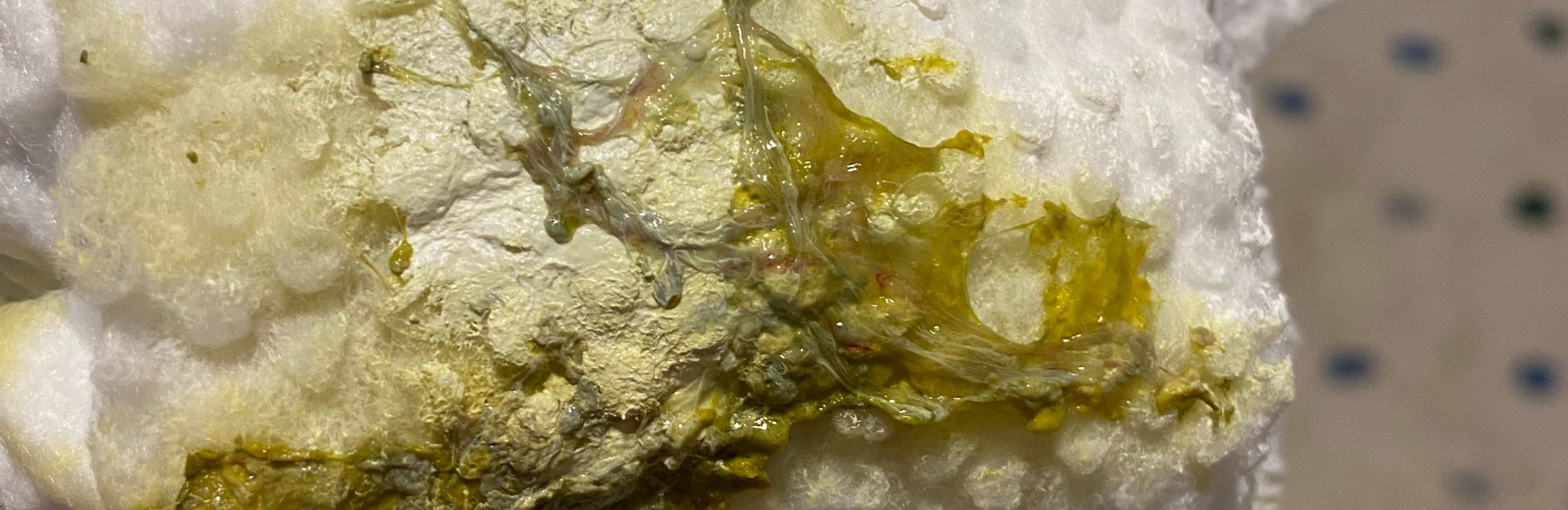
Although the image above shows mucous and green stools, the latter are normal variation for both breastfed and formula-fed infants. What matters in this image are the small streaks of blood in the centre and to the right of centre.
Is there evidence to show that breastfeeding protects against allergy?
Food allergy is defined as a reproducible adverse immunologic reaction to a food protein resulting in clinical symptoms.
-
Systematic reviews have not found definitive evidence that breastfeeding protects against or is associated with food allergy,
-
But a 2025 Australian study of 666 neonates by Bhasin et al, discussed in detail here, did find that introduction of formula within the first three days was linked with an increased risk of peanut allergy.
What is beta-lactoglobulin?
Cow's milk contains 30-35 g/l of proteins, with 80% as caseins and 20% whey proteins. You can find out about proteins in breast milk here.
β-lactoglobulin
-
Is a whey protein found in the milk of cows, goats, and sheep but not in human milk
-
Is found at a level of 3.3 g/l in bovine milk
-
Is the cow's milk whey protein most closely linked to cow's milk allergy, though caseins and other milk proteins can also potentially trigger allergic reactions
-
Is found at levels in breast milk which range from 0 mcg/l to 8 mcg/l, but can reach up to 800 mcg/l
-
Is found in measurable concentrations in breast milk up to 7 days after maternal intake of cow's milk.
Notably, variations in β-lactoglobulin levels have been observed even among women who consume the same amount of cow’s milk. These differences are likely influenced by physiological variations in the absorption of food proteins in the maternal gut and their subsequent transfer into breast milk. Other authors have emphasized that high β-lactoglobulin levels in breast milk are associated with prolonged cow’s milk intake.
Why cow's milk protein intolerance isn't a clinically useful diagnostic category in infants in the first year of life
A 2025 narrative review by Hage et al of the research literature investigating food hypersensitivity in all age groups concludes that food hypersensitivity has two facets:
-
Food allergy (an immune response to food proteins categorised into immunoglobulin IgE-mediated or non-IgE mediated reactions, and
-
Food intolerance, non-immunological reactions in which the gut cannot properly digest certain foods or components, leading to gastrointestinal discomfort and other non-immun-related symptoms.
Neuroprotective Developmental Care (NDC or The Possums programs), based upon both clinical observations and research reviews, notes the wide range of infant behaviours which are currently attributed to gut discomfort or pain, in the absence of supporting research and biologically plausible explanatory models.
NDC applies the lenses of complexity science, evolutionary biology, and transdisciplinary generalism to interpret the relevant research, and translate it into the NDC clinical guidelines. NDC identifies and manages genuine medical conditions as they occur, then proposes behavioural and breastfeeding interventions for unsettled infant behaviours without attribution of gut pain.
Summary of terminology from NDC perspective
From an NDC perspective, there is no reason to apply the terms 'food protein intolerance' or 'hypersensitivity' to infants, given the highly subjective interpretations of infant behaviour, and agrees with Caffarelli et al 2025 that it is most accurate to talk about the occasional, genuine cow's milk allergy in infants as non-IgE and IgE mediated immune responses - which can also overlap.
-
Cow's milk allergy (CMA) is best defined as an immune-mediated reaction to cow's milk proteins (e.g. casein, alpha-lactalbumin, beta-lactoglobulin), which occurs regularly after consumption. CMA involves aberrant immune reactions, predominantly IgE-mediated (Type I), but also Type III (immune complex) and Type IV (cell-mediated) reactions.
-
Cow's milk protein intolerance (CMPI), in contrast, has been used to refer to non-immunological adverse reactions to cow's milk proteins, attributed to digestive challenges. Since differentiating between diagnoses of CMA and CMPI based solely on clinical symptoms is unhelpful due to overlapping manifestations and diagnostic criteria, particularly gastrointestinal symptoms, NDC doesn't apply this term to infants.
A closer look at the mechanisms of immune response to food proteins
These are two distinct branches of the adaptive immune system, at play in food protein immune reactions. Both can be protective or pathological depending on context.
IgE-mediated response (Type I hypersensitivity /allergic response)
The key players in an IgE-mediated immune response are B cells (B lymphocytes which mature in bone marrow), IgE antibodies, mast cells, basophils, and eosinophils.
-
On first exposure to an allergen, B lymphocytes are stimulated to produce IgE antibodies. IgE binds to receptors on mast cells and basophils (sensitization).
-
On re-exposure, the allergen cross-links with the bound IgE, triggering degranulation — release of histamine, leukotrienes, and other mediators. This causes the classic allergic symptoms: vasodilation, bronchoconstriction, mucus secretion, itching.
-
Timing is very fast — symptoms appear within minutes of exposure (early phase), with a possible late phase at 4–8 hours driven by eosinophils. This may result in anaphylaxis, allergic asthma, hay fever (allergic rhinitis), hives.
Cell-mediated response (Type IV hypersensitivity / delayed-type)
The key players are T cells (T lymphocytes, which mature in the thymus, release cytokine, are responsible for celll-mediated immune and direct killing of target cells; also macrophages) — no antibodies are involved.
-
On exposure, antigen-presenting cells process and present the antigens to T lymphocytes.
-
Sensitized T lymphocytes are recruited to the site on re-exposure. CD4+ T cells release cytokines which activate macrophages; CD8+ T cells directly kill target cells. This drives inflammation and tissue damage, and sometimes granuloma formation.
-
A cell-mediated immune response is slow — peaks at 48–72 hours after exposure (hence "delayed-type")
Research demonstrates overtreatment of mothers and infants with cow's milk elimination diets due to confusion about diagnostic categories
Allen et al 2024
1394 children born in England 2014-2016
-
Underwent formal cow's milk allergy (CMA) diagnosis at 2 years of age or less
-
1.4% found to have CMA
-
16.1% of parents reported cow's milk hypersensitivity
-
11.3% had primary care provider record of cow's milk hypersensitivity
Munblit et al 2020
Analysed nine clinical guidelines, found
-
Seven consider CMA a cause of common infant symptoms e.g. crying, vomiting, rashes
-
But clinical trials don't support maternal or infant cow's milk exclusion for managing these symptoms in the absence of proven CMA
-
Estimate CMA proven by food challenge in 1% of infants but these common symptoms reported in 15-20% of infants
Recommended resources
Infant haematochezia + allergy NDC guidelines (0-12 months) 29_6_26.pdf
Infant allergy, unsettled behaviour, and the gut: PLAIN LANGUAGE SUMMARY for health professionals
Infant haematochezia (blood in the stool): PLAIN LANGUAGE SUMMARY for health professionals
It's normal for babies to have green stools and mucous in the stool
Is your baby unsettled or having trouble sleeping because of allergy?
Selected references
Abrams EM, Shaker MS, Chan ES. Prevention of food allergy in infancy: the role of maternal interventions and exposures during pregnancy and lactation. The Lancet Child and Adolescent Health. 2023;7:358-366.
Allen HI, Wing O, Milkova D. Prevalence and risk factors for milk allergy overdiagnosis in the BEEP trial cohort. Food Allergy and Gastrointestinal Disease. 2024;80:148-160. DOI: 110.1111/all.16203.
Bhasin M, Cooper M, Macchiaverni P. Colostrum as a protective factor against peanut allergy: evidence from a birth cohort. Allergy. 2025:1–11. https://doi.org/10.1111/all.70043.
Buccini G, Larrison C, Neupane S, et al. Complex intertwined association between breastfeeding practices and household food insecurity: Systematic review and meta-analysis. Matern Child Nutr. 2024;20(4):e13696. doi:10.1111/mcn.13696
Caffarelli C, Giannetti A, Buono EV. Cow's milk allergy in breastfed infants: what we need to know about mechanisms, management, and maternal role. Nutrients. 2025;17(1787):https://doi.org/10.3390/nu17111787.
Ding Y, Zhu C, Li S, et al. Breastfeeding and risk of food allergy and allergic rhinitis in offspring: a systematic review and meta-analysis of cohort studies. Eur J Pediatr. 2024;183(8):3433-3443. doi:10.1007/s00431-024-05580-w
Fleischer DM, Chan ES, Venter C. A consensus approach to the primary prevention of food allergy through nutrition: guidance from the American Academy of Allergy, Asthma, and Immunology; American College of Allergy, Asthma, and Immunology; and the Canadian Society of Allergy and Clinical Immunology. American Academy of Allergy, Asthma & Immunology. 2020:https://doi.org/10.1016/j.jaip.2020.1011.1002.
Hage G, Sacre Y, Haddad J. Food hypersensitivity: distinguishing allergy from intolerance, main characteristics, and symptoms - a narrative review. Nutrients. 2025;17:1359. https://doi.org/1310.3390/nu17081359.
Mahoney LB, Syverson EP, Elverson W, Venkatesh R. Food protein induced allergic proctocolitis: what do we know and where are we going? Current Treatment Options in Pediatrics. 2025;11(30):https://doi.org/10.1007/s40746-40025-00346-40744.
Munblit D, Perkin MR, Palmer D, Allen K, Boyle RJ. Assessment of evidence about common infant symptoms and cow's milk allergy. JAMA Pediatrics. 2020;174:599-608.